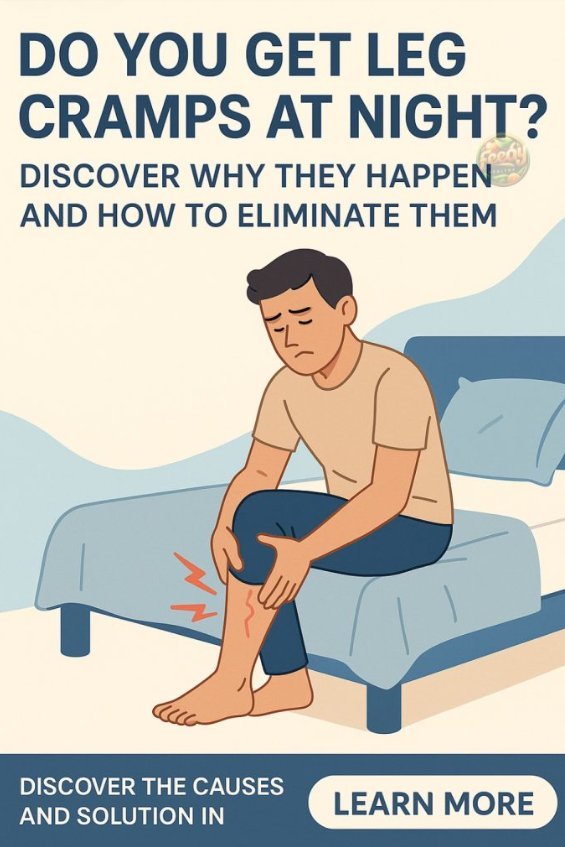
Nighttime Leg Cramps: 11 Common Causes, Natural Remedies, and What Your Body May Be Trying to Tell You
Waking up with painful leg cramps at night? Discover common causes of nighttime leg cramps and natural ways to relieve and prevent them.
Nighttime Leg Cramps: 11 Common Causes, Natural Remedies, and What Your Body May Be Trying to Tell You
It usually starts without warning.
You’re asleep — or just drifting off — when suddenly a sharp, tightening pain shoots through your calf, foot, or thigh.
Your muscle locks up.
You instinctively sit up, grab your leg, stretch desperately, and wait for the spasm to release.
Sometimes it lasts seconds.
Sometimes it feels endless.
And afterward, the soreness can linger into the next day.
Nighttime leg cramps are incredibly common, especially among adults over 40, pregnant women, athletes, and people with certain health conditions. Yet despite how common they are, many people still don’t understand why they happen — or what actually helps prevent them.
Some cramps are harmless and occasional.
Others may signal dehydration, circulation problems, medication side effects, nerve issues, mineral imbalances, or underlying medical conditions worth paying attention to.
The good news?
In many cases, small lifestyle changes can dramatically reduce how often these cramps occur.
This article breaks down the most common causes of nighttime leg cramps, what your body may be trying to communicate, and practical natural solutions that may help you sleep more comfortably again.
What Are Nighttime Leg Cramps?
Nighttime leg cramps are sudden, involuntary muscle contractions that typically occur during sleep or periods of rest.
They most commonly affect:
- calves
- feet
- toes
- thighs
Unlike restless leg syndrome — which creates an urge to move the legs — cramps involve intense muscle tightening and pain.
According to the Cleveland Clinic, nighttime leg cramps affect a significant percentage of adults and become more common with age.
Some people experience them occasionally.
Others deal with them several nights per week.
Why Leg Cramps Often Happen at Night
Many people wonder:
Why do cramps seem to strike when the body is finally trying to rest?
Several factors make nighttime more vulnerable:
- reduced movement
- shortened muscle position during sleep
- dehydration becoming more noticeable
- circulation slowing slightly during rest
- nerve sensitivity increasing at night
Sleep positions may also contribute, especially when feet remain pointed downward for long periods.
The exact mechanism isn’t always clear — which is why nighttime cramps can sometimes feel random and frustrating.
But patterns usually exist underneath.
1. Dehydration
One of the most common and overlooked causes of nighttime leg cramps is dehydration.
Muscles rely on proper fluid balance to contract and relax normally.
When hydration drops too low, muscle cells become more prone to involuntary spasms.
Signs Dehydration May Be Contributing
- Dry mouth
- Dark urine
- Fatigue
- Headaches
- Increased cramps after sweating or heat exposure
Common Triggers
- Hot weather
- Intense exercise
- Alcohol intake
- Diuretic medications
- Not drinking enough fluids during the day
Natural Solution
Focus on steady hydration throughout the day rather than chugging water right before bed.
Electrolyte-rich foods may also help support muscle function.
2. Mineral Imbalances
Low levels of certain minerals can interfere with normal muscle signaling.
The most commonly linked minerals include:
- magnesium
- potassium
- calcium
- sodium
Why Minerals Matter
Muscles and nerves communicate through electrical signals.
When mineral balance becomes disrupted, muscles may contract abnormally.
Possible Clues
- Muscle twitching
- Fatigue
- Weakness
- Frequent cramps
- Tingling sensations
Natural Food Sources
Magnesium
- spinach
- almonds
- pumpkin seeds
- black beans
Potassium
- bananas
- sweet potatoes
- avocados
- yogurt
Calcium
- dairy products
- leafy greens
- fortified foods
The National Institutes of Health notes that magnesium deficiency may contribute to muscle dysfunction in some individuals.
3. Sitting Too Long During the Day
Modern life keeps many people seated for hours.
Long periods of inactivity can affect:
- circulation
- muscle flexibility
- nerve function
This may increase nighttime muscle tightness and cramping.
High-Risk Situations
- Desk jobs
- Long drives
- Frequent flying
- Excessive screen time
Natural Solution
Try:
- standing every 30–60 minutes
- light stretching breaks
- walking after meals
- gentle evening movement
Sometimes simple movement changes make a major difference.
4. Overuse or Muscle Fatigue
Ironically, both too little movement and too much exercise can trigger cramps.
Muscles that are overworked may become more irritable at night during recovery.
Common Scenarios
- Long hikes
- Intense workouts
- Standing all day
- Sports training
- Sudden increases in physical activity
What Helps
- Proper warmups
- Gradual training progression
- Post-exercise stretching
- Recovery hydration
- Adequate sleep
Athletes often underestimate how much recovery affects nighttime muscle behavior.
5. Poor Circulation
Circulation problems may reduce oxygen delivery to muscles and contribute to cramping.
Possible Warning Signs
- Cold feet
- Leg numbness
- Skin color changes
- Pain during walking
- Swelling
Poor circulation becomes more common with:
- aging
- smoking
- diabetes
- high blood pressure
- vascular disease
Important Note
Persistent leg pain, swelling, or circulation changes deserve medical evaluation — especially if symptoms worsen.
6. Pregnancy
Nighttime leg cramps are extremely common during pregnancy, particularly in the second and third trimesters.
Why Pregnancy Increases Cramping Risk
Possible factors include:
- increased weight on muscles
- circulation changes
- mineral demands
- nerve compression
- fluid shifts
According to the American Pregnancy Association, calf cramps frequently occur at night during pregnancy.
Helpful Strategies
- Prenatal-approved stretching
- Hydration
- Comfortable sleep positioning
- Gentle walking
- Discussing supplements with a healthcare provider
Pregnant women should always consult a doctor before starting supplements.
7. Certain Medications
Some medications may increase cramping risk as a side effect.
Possible examples include:
- diuretics
- statins
- some blood pressure medications
- asthma medications
Why This Happens
Certain drugs may:
- alter mineral balance
- affect circulation
- irritate nerves
- increase dehydration
Important Reminder
Never stop prescription medications without medical guidance.
But if cramps started after beginning a new medication, discussing the timing with your doctor is reasonable.
8. Sleeping Position
Sometimes the issue is surprisingly mechanical.
Sleeping with toes pointed downward can shorten calf muscles overnight and increase cramping risk.
Common Problem Positions
- Sleeping on the stomach
- Tight blankets forcing foot position
- Curled sleeping posture
Natural Solution
Try:
- sleeping on your back
- loosening blankets
- keeping feet in a neutral position
- using supportive pillows
Even small posture changes may help reduce nighttime spasms.
9. Nerve Compression or Back Problems
Nerves help control muscle movement.
Compression involving the lower back or spine may contribute to leg cramps or abnormal muscle signaling.
Potential Signs
- Shooting pain
- Numbness
- Tingling
- Weakness
- Back discomfort
Sciatica and spinal nerve irritation sometimes worsen at night due to prolonged positioning.
When To Seek Medical Advice
If cramps occur alongside:
- severe weakness
- bladder changes
- persistent numbness
- worsening back pain
medical evaluation is important.
10. Diabetes and Blood Sugar Issues
People with diabetes may experience leg cramps because of:
- nerve damage
- circulation problems
- dehydration
- electrolyte imbalances
The American Diabetes Association notes that diabetic neuropathy commonly affects the legs and feet.
Other Clues Diabetes May Be Involved
- Increased thirst
- Frequent urination
- Tingling feet
- Slow wound healing
- Fatigue
Recurring cramps combined with these symptoms deserve attention.
11. Aging and Muscle Changes
As people age, muscle mass and flexibility naturally decline.
Older adults may also experience:
- reduced circulation
- medication interactions
- lower activity levels
- changes in nerve function
This helps explain why nighttime leg cramps become more common after age 50.
But frequent cramping should not simply be dismissed as “normal aging.”
Often, modifiable factors still exist.
Comparison Table: Common Causes of Nighttime Leg Cramps
| Cause | Common Clues |
|---|---|
| Dehydration | Dry mouth, fatigue |
| Low magnesium/potassium | Twitching, weakness |
| Sitting too long | Tightness after inactivity |
| Muscle overuse | Exercise-related soreness |
| Poor circulation | Cold feet, numbness |
| Pregnancy | Second/third trimester cramps |
| Medications | New symptoms after prescriptions |
| Sleep position | Cramps after certain postures |
| Nerve compression | Tingling, shooting pain |
| Diabetes | Burning feet, thirst |
| Aging | Increased frequency over time |
Natural Remedies That May Help Prevent Nighttime Leg Cramps
Gentle Stretching Before Bed
Stretching the calves and hamstrings before sleep may reduce muscle tightness overnight.
Helpful Stretch
Stand facing a wall:
- place one foot behind the other
- press heel into floor
- lean forward gently
Hold 20–30 seconds.
Stay Consistently Hydrated
Hydration works best when maintained steadily all day.
Don’t wait until bedtime to drink most of your fluids.
Improve Electrolyte Intake Through Food
Whole-food nutrition often supports muscle function better than relying heavily on supplements alone.
Focus on:
- leafy greens
- fruits
- nuts
- seeds
- yogurt
- beans
Warm Baths or Heating Pads
Heat may relax tight muscles and improve circulation before bed.
Many people notice fewer cramps after:
- warm showers
- Epsom salt baths
- heating pad use
Light Evening Activity
Gentle movement can help.
Examples:
- walking
- yoga
- mobility exercises
- stretching
Completely sedentary evenings sometimes worsen stiffness.
A Real-World Scenario Many Adults Experience
Mark, a 56-year-old accountant, began waking up several nights per week with severe calf cramps.
At first, he blamed aging.
But after tracking patterns, he noticed:
- long sitting hours
- poor hydration
- heavy evening alcohol intake
- little stretching
After increasing water intake, walking during work breaks, and adding nightly stretching, his cramps became far less frequent within a month.
The solution wasn’t dramatic.
It was cumulative habit changes.
That’s often how nighttime cramps improve.
Common Mistakes People Make
Mistake #1: Ignoring Persistent Symptoms
Occasional cramps are common.
But frequent severe cramps deserve attention — especially if new or worsening.
Mistake #2: Stretching Too Aggressively During a Cramp
Forceful stretching may worsen muscle irritation.
Gentle, steady stretching works better.
Mistake #3: Assuming Bananas Alone Will Fix Everything
Potassium matters.
But cramps may involve:
- hydration
- circulation
- medications
- nerves
- overall muscle health
The cause is often multifactorial.
Mistake #4: Overlooking Medication Side Effects
Many people never connect cramps to prescriptions or dehydration from medications.
When To See a Doctor
Seek medical advice if leg cramps:
- happen frequently
- become severe
- involve swelling or redness
- occur with weakness or numbness
- interfere significantly with sleep
- begin suddenly without explanation
Emergency care may be necessary for:
- sudden leg swelling
- chest pain
- shortness of breath
- signs of blood clots
The 2026 Trend Experts Are Watching
Sleep and recovery health are receiving far more attention than they did even a decade ago.
Healthcare professionals are increasingly recognizing how:
- hydration
- mobility
- metabolic health
- sleep quality
- sedentary lifestyles
all influence nighttime muscle function.
Wearable technology and recovery-focused fitness trends are also helping people identify patterns between:
- activity
- hydration
- sleep disruption
- muscle recovery
That broader awareness may help more people address cramps before they become chronic.
Frequently Asked Questions
Why do leg cramps happen mostly at night?
Reduced movement, muscle positioning, dehydration, and nerve sensitivity may all contribute to nighttime cramping.
Are nighttime leg cramps dangerous?
Usually not. But persistent, severe, or sudden cramps may sometimes signal circulation issues, nerve problems, or medical conditions that need evaluation.
Does dehydration really cause leg cramps?
Yes. Fluid imbalance can interfere with normal muscle contraction and relaxation.
What deficiency causes leg cramps?
Low magnesium, potassium, calcium, or sodium may contribute in some cases.
Can diabetes cause nighttime leg cramps?
Yes. Diabetes may contribute through nerve damage, circulation problems, and dehydration.
Do bananas help leg cramps?
Bananas provide potassium, which supports muscle function. But cramps often involve multiple contributing factors.
Should I stretch during a leg cramp?
Gentle stretching usually helps relax the muscle. Avoid aggressive pulling or bouncing.
Why are leg cramps more common with age?
Aging affects muscle flexibility, circulation, hydration balance, and nerve function.
Can poor circulation cause leg cramps?
Yes. Reduced blood flow may contribute to muscle discomfort and cramping.
When should I worry about leg cramps?
Seek medical care if cramps become severe, frequent, involve swelling or weakness, or suddenly worsen.
Action Checklist: How to Reduce Nighttime Leg Cramps
What To Do
✔ Stay hydrated consistently
✔ Stretch calves and legs before bed
✔ Eat mineral-rich whole foods
✔ Move regularly during the day
✔ Improve sleep positioning
✔ Warm tight muscles before sleep
✔ Monitor medication side effects
✔ Seek medical advice for persistent symptoms
What To Avoid
✘ Ignoring frequent severe cramps
✘ Sitting for extremely long periods
✘ Excessive alcohol intake
✘ Overtraining without recovery
✘ Sleeping in cramped positions
✘ Assuming cramps are “just aging”
Final Thoughts
Nighttime leg cramps can feel random, frustrating, and surprisingly disruptive.
One painful spasm can ruin an otherwise restful night.
But in many cases, these cramps are not completely mysterious.
They often reflect underlying patterns involving:
- hydration
- circulation
- muscle fatigue
- mineral balance
- nerve function
- lifestyle habits
The encouraging part is that small, consistent changes frequently make a noticeable difference.
Better hydration. More movement. Smarter recovery. Improved sleep habits.
Sometimes the body is simply asking for better support.
Nighttime leg cramps are common but often manageable. Hydration, stretching, movement, nutrition, and identifying underlying causes can help reduce painful nighttime muscle spasms and improve sleep quality.
If this article helped you, share it with someone dealing with nighttime cramps, leave a comment with your experience, or explore more wellness articles for healthier sleep and recovery.