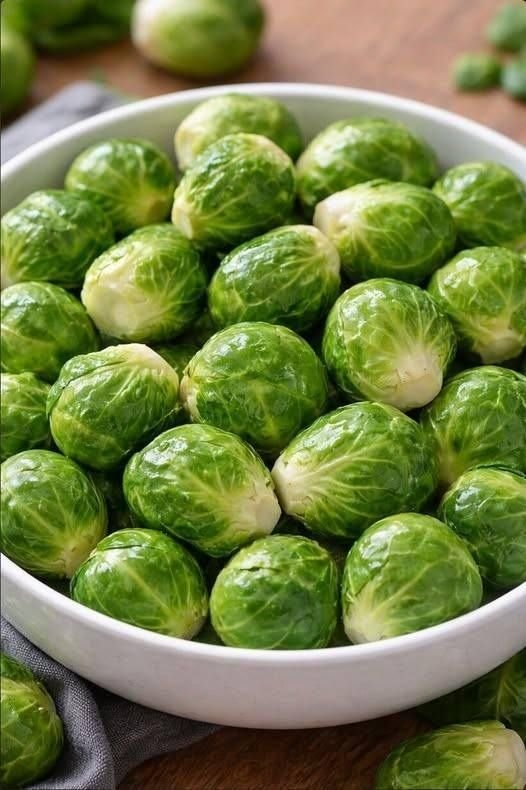
Who Actually Eats Brussels Sprouts on Purpose? (And Why They Keep Coming Back for More)
Think Brussels sprouts are gross? Discover why so many people love them, how to cook them right, and why your past experience might be misleading.
The Honest Question Everyone’s Thinking
Let’s not pretend.
Brussels sprouts have a reputation—and not a great one.
For a lot of people in the U.S., they’re the vegetable you were forced to eat as a kid. Overcooked. Bitter. Mushy. The kind of food that made you question whether adults actually had taste buds.
So yeah… it’s a fair question:
Who actually chooses to eat Brussels sprouts?
Surprisingly?
A lot of people.
And not reluctantly—on purpose.
The Real Reason You Probably Hate Them
Here’s the truth most people don’t hear:
You probably don’t hate Brussels sprouts.
You hate badly cooked Brussels sprouts.
For decades, they were boiled into oblivion. That process releases sulfur compounds (the same ones that give off that “eggy” smell), turning something with potential into something… memorable for all the wrong reasons.
But things changed.
In the late 1990s and early 2000s, agricultural scientists actually bred new varieties of Brussels sprouts to be less bitter. At the same time, cooking trends shifted in the U.S.—away from boiling and toward roasting, sautéing, and grilling.
The result?
A completely different experience.
Why People Actually Like Them Now
🔥 1. Roasting Changed Everything
When you roast Brussels sprouts at high heat, something magical happens:
- The outside gets crispy
- The inside turns tender
- Natural sugars caramelize
That bitterness? It fades into the background.
Instead, you get something nutty, slightly sweet, and deeply satisfying.
🧠 2. They Hit the “Savory + Crunch” Combo
Humans love contrast in food.
Brussels sprouts—when cooked right—deliver:
- Crunch + softness
- Bitter + sweet
- Crisp edges + creamy center
It’s the same reason people love things like roasted potatoes or crispy bacon.
💪 3. They’re Actually Good for You (Without Feeling Like It)
Let’s keep it real—most people don’t eat vegetables just for health.
But it helps when something tastes good and delivers:
- Fiber
- Vitamin C
- Vitamin K
- Antioxidants
According to sources like Harvard’s nutrition research, cruciferous vegetables (like Brussels sprouts) are linked to long-term health benefits.
That’s a nice bonus.
What Converts “Haters” Into Fans
There’s usually a turning point.
A moment where someone says:
“Wait… these are actually good?”
It almost always involves one of these:
🧈 Roasted with Olive Oil + Salt
Simple. Reliable. Hard to mess up.
🍯 Honey Balsamic Glaze
Adds sweetness that balances the natural bitterness.
🥓 With Bacon
Let’s not overthink it.
Fat + salt + crisp texture = instant upgrade.
🧀 Parmesan + Garlic
Savory overload in the best way.
Step-by-Step: How to Make Brussels Sprouts That Don’t Suck
If you’ve only had the bad version, try this once before writing them off forever.
Step 1: Prep
- Trim the ends
- Cut in half
- Remove any loose outer leaves
Step 2: Season
- Olive oil
- Salt
- Pepper
Optional: garlic powder, paprika
Step 3: Roast
- Oven at 425°F
- Spread them out (don’t overcrowd)
- Roast 20–30 minutes
Step 4: Finish
- Add lemon juice, parmesan, or balsamic glaze
That’s it.
No chef skills required.
Why They Show Up Everywhere Now
If you’ve eaten out recently, you’ve probably seen Brussels sprouts on menus—especially at modern American restaurants.
They’ve become a “chef’s vegetable.”
Why?
Because they’re versatile:
- Can be crispy or tender
- Pair well with bold flavors
- Look elevated on a plate
Restaurants know something important:
When done right, people order them again.
Common Mistakes That Ruin Them
Let’s save you from disappointment.
❌ Boiling Them
This is the #1 reason people hate them.
Fix: Roast or sauté instead.
❌ Overcrowding the Pan
They steam instead of crisp.
Fix: Give them space.
❌ Under-seasoning
Vegetables need flavor.
Fix: Don’t be shy with salt and fat.
❌ Not Cooking Them Long Enough
You miss the caramelization.
Fix: Look for browned edges.
Pros and Cons (Let’s Be Fair)
| Pros | Cons |
|---|---|
| Nutritious | Can taste bitter if overcooked |
| Versatile | Strong smell if cooked poorly |
| Easy to prepare | Not universally loved |
| Affordable | Requires proper technique |
The Psychology Behind the Hate
This part’s interesting.
Food aversions often come from early experiences.
If your first exposure to Brussels sprouts was bad, your brain labeled them as “avoid.”
But taste isn’t fixed.
It evolves.
That’s why so many adults revisit foods they hated as kids—and suddenly like them.
A Quick Scenario You Might Recognize
You’re at a restaurant.
Someone orders Brussels sprouts for the table.
You hesitate.
Then you try one.
It’s crispy. Salty. Slightly sweet.
You pause.
“Okay… these are actually good.”
That’s how it starts.
What’s Trending in 2026
Brussels sprouts aren’t going anywhere.
Current trends include:
- Air fryer versions (faster, crispier)
- Spicy variations with chili oil or hot honey
- Plant-based dishes using them as a main ingredient
- Shaved raw Brussels sprouts in salads
They’ve officially moved from “side dish nobody wants” to “dish people look forward to.”
FAQ: What People Still Ask
1. Why do Brussels sprouts taste bitter?
They contain natural compounds that become stronger when overcooked.
2. Are they healthier than broccoli?
They’re similar—both are highly nutritious.
3. Can you eat them raw?
Yes, especially shaved in salads.
4. Why did they taste worse as a kid?
Older varieties were more bitter, and cooking methods were worse.
5. What’s the best way to cook them?
Roasting or air frying.
6. Do they really smell bad?
Only when overcooked or boiled.
7. Are frozen Brussels sprouts okay?
Yes, but fresh usually gives better texture.
8. What pairs well with them?
Garlic, cheese, bacon, balsamic, lemon.
9. Can picky eaters learn to like them?
Absolutely—with the right preparation.
10. Are they worth trying again?
If you’ve only had the bad version—yes.
Action Checklist
Do This:
✔ Roast at high heat
✔ Use enough oil and seasoning
✔ Try different flavor combos
✔ Give them another chance
Avoid This:
✘ Boiling
✘ Overcrowding
✘ Under-seasoning
✘ Judging based on childhood memories
Final Thoughts
Brussels sprouts didn’t change overnight.
We did.
Better farming. Better cooking. Better understanding of flavor.
So the real question isn’t:
“Who eats Brussels sprouts on purpose?”
It’s:
“Have you only experienced the worst version of them?”
Brussels sprouts aren’t the problem—how they’re cooked is. Try them the right way once, and you might surprise yourself.
If you’ve had a “conversion moment” with Brussels sprouts, share it. Or better yet—send this to someone who still thinks they’re disgusting.