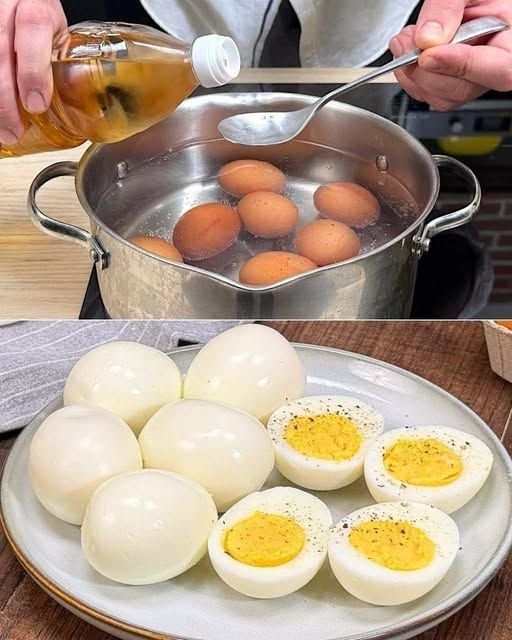
THE TRICK TO PERFECTLY BOILED EGGS: Avoid These 5 Mistakes for Easy-Peel Shells Every Time
Struggling with hard-to-peel boiled eggs? Discover the 5 biggest mistakes and the simple tricks to get perfectly cooked, easy-peel eggs every time.
Why Your Boiled Eggs Look Fine… But Peel Like a Nightmare
You did everything right—or so you thought.
The water boiled. The timer was set. The eggs looked perfect from the outside.
And then… disaster.
Chunks of egg white tearing away with the shell. A rough, cratered surface. Half your egg gone before it even hits the plate.
It’s frustrating—and completely avoidable.
Here’s the truth most people miss: perfectly boiled eggs aren’t about luck. They’re about avoiding a few very specific mistakes.
Once you fix these, everything changes.
What Makes an Egg Hard to Peel?
Before we jump into the mistakes, it helps to understand what’s actually happening.
Inside every egg, there’s a thin membrane between the shell and the egg white. When eggs are too fresh or cooked improperly, that membrane sticks tightly to the white.
That’s what causes the tearing.
The goal? Create just enough separation so the shell slides off cleanly.
The 5 Biggest Mistakes That Ruin Boiled Eggs
1. Using Super Fresh Eggs
This sounds backward—but it’s one of the biggest reasons your eggs won’t peel.
Fresh eggs have a lower pH, which makes the egg white bond more tightly to the shell membrane.
Fix:
Use eggs that are at least 5–7 days old. Slightly older eggs peel much more easily.
2. Starting in Cold Water (Without a Plan)
A lot of advice says to start eggs in cold water and bring them to a boil.
The problem? It’s inconsistent.
Sometimes the gradual heating causes the membrane to stick more firmly.
Fix:
Add eggs to already boiling water for more predictable results. It helps separate the membrane from the egg white.
3. Skipping the Ice Bath
If you’re not shocking your eggs in ice water, you’re making peeling harder than it needs to be.
The rapid cooling causes the egg to contract slightly inside the shell—creating space.
Fix:
Transfer eggs immediately into an ice bath for at least 5–10 minutes.
4. Overcooking the Eggs
Overcooked eggs aren’t just rubbery—they’re harder to peel.
They also develop that gray-green ring around the yolk (which doesn’t look great either).
Fix:
Stick to precise timing:
- Soft-boiled: 6–7 minutes
- Medium: 8–9 minutes
- Hard-boiled: 10–12 minutes
5. Peeling Them the Wrong Way
Even perfectly cooked eggs can get ruined by bad peeling technique.
Fix:
- Crack the egg gently all over
- Start peeling from the wider end (where the air pocket is)
- Peel under running water for extra ease
The Foolproof Method for Perfect Boiled Eggs
Follow this step-by-step method and you’ll notice the difference immediately.
Step 1: Bring Water to a Boil
Use enough water to fully cover your eggs.
Step 2: Gently Lower in the Eggs
Use a spoon to avoid cracking.
Step 3: Set Your Timer
- 6 minutes for soft
- 10 minutes for hard
Step 4: Prepare an Ice Bath
A bowl of cold water + ice cubes.
Step 5: Transfer Immediately
Move eggs straight from boiling water into the ice bath.
Step 6: Peel the Right Way
Tap, roll, and peel from the wide end.
Real-Life Scenario: Before vs After Fixing These Mistakes
Before:
- Eggs stuck to shells
- Whites tore apart
- Uneven texture
After:
- Smooth, clean surface
- Shell slides off easily
- Consistent results every time
It’s not a small upgrade—it’s a complete transformation.
Pro Tips Most People Don’t Know
- Add a teaspoon of baking soda to the water to raise pH (optional, but helpful)
- A splash of vinegar can help if shells crack during boiling
- Store boiled eggs unpeeled to keep them fresh longer
- Roll the egg gently on a counter before peeling to loosen the shell
Comparison: Common Methods vs Best Method
| Method | Peeling Ease | Consistency | Effort |
|---|---|---|---|
| Cold start | Low | Inconsistent | Easy |
| Boiling start + ice bath | High | Very consistent | Moderate |
| Steaming method | Very high | Extremely consistent | Moderate |
Steaming is actually one of the most reliable methods—but boiling works perfectly when done right.
Pros and Cons of This Method
Pros
- Easy to follow
- Highly consistent results
- Works with standard kitchen tools
Cons
- Requires timing precision
- Needs ice bath prep
Common Mistakes Recap (Quick Fix Guide)
- Using ultra-fresh eggs → Use slightly older ones
- Skipping ice bath → Always cool rapidly
- Guessing cook time → Use a timer
- Peeling dry → Add water for easier removal
What’s Changing in 2026 Kitchen Trends
More home cooks are shifting toward:
- Precision cooking methods
- Simpler techniques with better results
- Less guesswork, more consistency
Even something as basic as boiled eggs is getting a smarter approach.
FAQs
1. Why are my boiled eggs so hard to peel?
Usually because they’re too fresh or weren’t cooled properly.
2. Is it better to boil or steam eggs?
Steaming often makes peeling even easier, but boiling works great with the right method.
3. How long should I boil eggs for perfect results?
Around 10–12 minutes for hard-boiled eggs.
4. Do I really need an ice bath?
Yes—it’s one of the most important steps for easy peeling.
5. Can I peel eggs later instead of right away?
Yes, but cooling them properly first is key.
6. Why do my eggs have a green ring?
They’re overcooked.
7. Should I add salt to the water?
It doesn’t affect peeling much, but can help with flavor if shells crack.
8. How do I store boiled eggs?
Keep them in the fridge, unpeeled, for up to a week.
Action Checklist
Do This:
✔ Use slightly older eggs
✔ Start with boiling water
✔ Use an ice bath immediately
✔ Time your cooking precisely
✔ Peel from the wide end
Avoid This:
✘ Using ultra-fresh eggs
✘ Skipping cooling
✘ Overcooking
✘ Peeling dry
✘ Rushing the process
Perfectly boiled eggs aren’t about fancy tools or complicated techniques.
They come down to a few simple decisions—and avoiding a handful of mistakes.
Once you get it right, it becomes second nature.
And yes… peeling eggs will finally stop being the most annoying part.
Fix the 5 key mistakes, and you’ll get smooth, easy-peel boiled eggs every single time.
Tried this method? Share your results—or your biggest egg struggles. There’s always a better way to crack the problem.