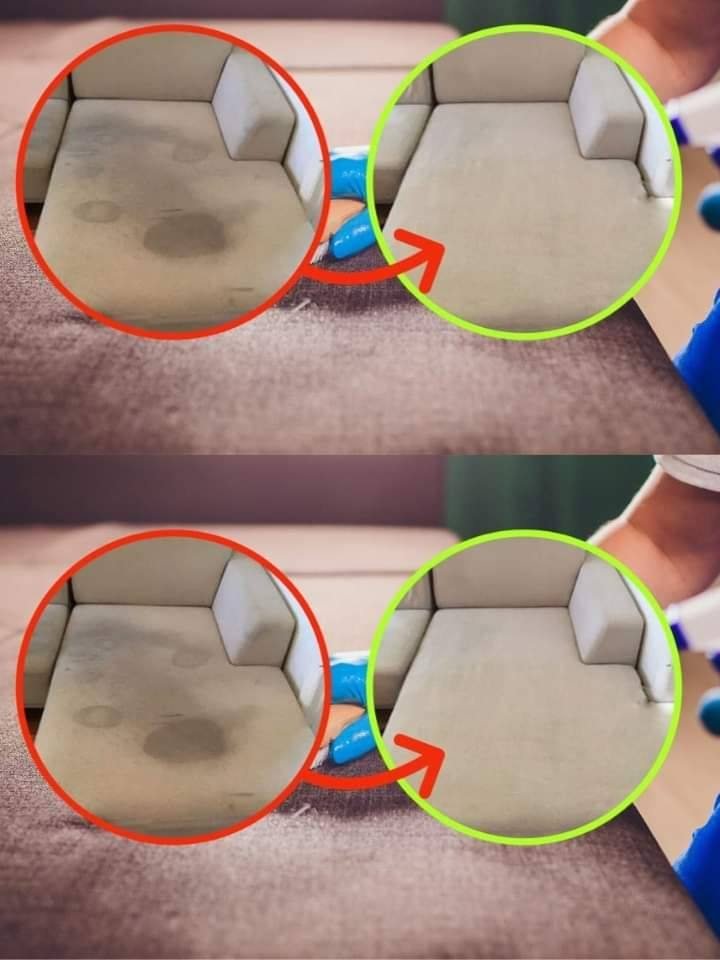
To Remove Stains from Your Sofa at Home, Use This Powerful Natural Stain Remover That Actually Works on Most Fabrics
Learn a simple natural sofa stain remover using household ingredients to lift spills, dirt, and marks safely without harsh chemicals.
A spilled cup of tea.
A greasy fingerprint.
A stubborn dark mark you didn’t notice until it set in.
Sofa stains have a frustrating habit of appearing at the worst possible time—and the worst part is how quickly they seem permanent.
But here’s something most people overlook:
You don’t always need expensive upholstery cleaners or strong chemicals to fix the problem.
In many cases, a simple natural mixture made from everyday household ingredients can lift stains effectively, refresh fabric, and restore the look of your sofa in minutes.
This guide breaks down a powerful natural stain-removal method that’s gentle, accessible, and surprisingly effective on common household stains.
Why Sofa Stains Are So Hard to Remove
Sofas aren’t like clothes—you can’t just toss them in a washing machine.
Fabric upholstery absorbs liquids quickly because:
- Fibers are tightly woven
- Padding underneath traps moisture
- Oils and pigments bond with fabric over time
Common stains include:
- Food spills
- Tea and coffee marks
- Oil and grease
- Ink smudges
- Dust buildup
The longer a stain sits, the deeper it settles into the fabric layers.
That’s why quick action matters more than anything else.
The Natural Stain Remover That Works
This method uses a simple combination of:
- Baking soda
- White vinegar
- Mild dish soap
- Warm water
These ingredients work together to break down stains, neutralize odors, and lift dirt from fabric fibers.
No harsh chemicals. No expensive products.
How This Natural Cleaner Works
1. Baking Soda (Absorbs and Lifts Dirt)
Baking soda helps:
- Absorb moisture and oils
- Loosen dried stains
- Neutralize odors
It acts like a gentle lifting agent for fabric.
2. White Vinegar (Breaks Down Stains)
Vinegar helps:
- Dissolve sticky residue
- Break down discoloration
- Sanitize the surface lightly
Its mild acidity helps separate stains from fibers.
3. Dish Soap (Removes Grease)
Dish soap targets:
- Oil-based stains
- Food residue
- Sticky buildup
It helps emulsify grease so it can be wiped away.
Step-by-Step Sofa Stain Removal Method
Step 1: Blot the Stain Immediately
Use a clean cloth or paper towel.
- Do NOT rub
- Gently press to absorb liquid
Rubbing pushes stains deeper.
Step 2: Sprinkle Baking Soda
- Cover the stained area lightly
- Let it sit for 10–15 minutes
This helps absorb moisture and loosen debris.
Step 3: Prepare Cleaning Solution
Mix in a bowl:
- 1 cup warm water
- 1 tablespoon white vinegar
- 1 teaspoon dish soap
Stir gently.
Step 4: Apply the Solution
- Dip a clean cloth into the mixture
- Dab (don’t soak) the stain
- Work from outer edges inward
This prevents spreading.
Step 5: Let It Sit Briefly
Allow the solution to sit for 5–10 minutes.
This gives it time to break down the stain.
Step 6: Blot with Clean Water
Use a fresh damp cloth to remove residue.
Step 7: Dry Properly
- Use a dry towel to absorb moisture
- Let the sofa air dry completely
Avoid sitting on it until fully dry.
Real-Life Example
A family noticed a coffee spill on their light-colored fabric sofa.
Instead of using a chemical cleaner, they tried this natural method:
- Baking soda absorbed the fresh spill
- Vinegar solution lifted the stain
- Dish soap removed the oily residue
Within one treatment, the stain became significantly lighter, and after a second round, it was barely visible.
No fabric damage. No harsh smell.
Types of Stains This Method Works Best On
✔ Coffee and tea
✔ Juice spills
✔ Light food stains
✔ Sweat marks
✔ Light grease stains
✔ General dirt buildup
Stains That May Need Extra Care
Some stains are more stubborn:
- Ink stains
- Deep oil stains
- Old, set-in discoloration
- Dye transfer stains
These may require repeated cleaning or professional upholstery treatment.
Comparison: Natural Cleaner vs Chemical Cleaners
| Feature | Natural Method | Chemical Cleaners |
|---|---|---|
| Safety | High | Moderate to low |
| Cost | Very low | Higher |
| Fabric risk | Minimal | Can damage delicate fabrics |
| Effectiveness | Good for common stains | Stronger on tough stains |
| Odor | Neutral/fresh | Sometimes strong chemical smell |
Common Mistakes People Make
1. Scrubbing Too Hard
This spreads the stain and damages fibers.
Fix: Always blot gently.
2. Using Too Much Water
Over-wetting can lead to mold or odor.
Fix: Use damp, not soaked, cloths.
3. Ignoring Fabric Type
Some fabrics are delicate.
Fix: Test solution on a hidden area first.
4. Waiting Too Long
Old stains are harder to remove.
Fix: Treat stains as soon as possible.
Expert Tip: Always Test First
Before applying any cleaner:
- Try it on a hidden corner
- Wait a few minutes
- Check for discoloration
This prevents accidental damage.
Additional Natural Boosters (Optional)
You can enhance cleaning power with:
- Lemon juice (for odor and brightness)
- Hydrogen peroxide (for light-colored fabrics only)
- Cornstarch (for oil absorption)
Use carefully depending on fabric type.
Maintenance Tips to Keep Your Sofa Clean
1. Vacuum Weekly
Removes dust and prevents buildup.
2. Use Fabric Protectors
Helps repel spills.
3. Clean Spills Immediately
Speed matters more than method.
4. Rotate Cushions
Ensures even wear.
Mini Scenario
A homeowner with a beige fabric sofa noticed repeated snack stains from daily use.
Instead of hiring professional cleaning every time, they adopted this natural method:
- Quick baking soda treatment after spills
- Weekly light cleaning routine
- Immediate blotting habit
Within weeks, the sofa stayed noticeably cleaner with minimal effort.
Frequently Asked Questions
1. Is this method safe for all sofas?
It works for most fabric sofas, but always test first.
2. Can it remove old stains?
It may lighten them, but multiple treatments might be needed.
3. Does vinegar damage fabric?
Not when diluted properly.
4. How often can I use this method?
As needed, but avoid over-saturating fabric.
5. Can I use this on leather sofas?
No—leather requires specialized cleaners.
6. Will it leave a smell?
No, vinegar smell fades once dry.
7. Can it remove grease stains completely?
Light grease stains respond well; heavy stains may need repeat cleaning.
8. Do I need special equipment?
No—just household items and a cloth.
Action Checklist
Do This:
✔ Blot stains immediately
✔ Use baking soda first
✔ Apply diluted cleaning solution
✔ Test fabric before full use
✔ Dry thoroughly
Avoid This:
✘ Scrubbing aggressively
✘ Soaking fabric excessively
✘ Ignoring stain age
✘ Skipping patch tests
Conclusion
Sofa stains don’t have to mean permanent damage or expensive cleaning services.
With a simple combination of baking soda, vinegar, dish soap, and warm water, you can handle most everyday spills safely and effectively at home.
The key isn’t complexity—it’s timing, gentleness, and consistency.
A simple natural stain remover made from household ingredients can lift most common sofa stains effectively when used correctly and quickly.
If you found this helpful, share it with someone who’s dealing with stubborn sofa stains—and explore more simple home care tricks that save time and money.