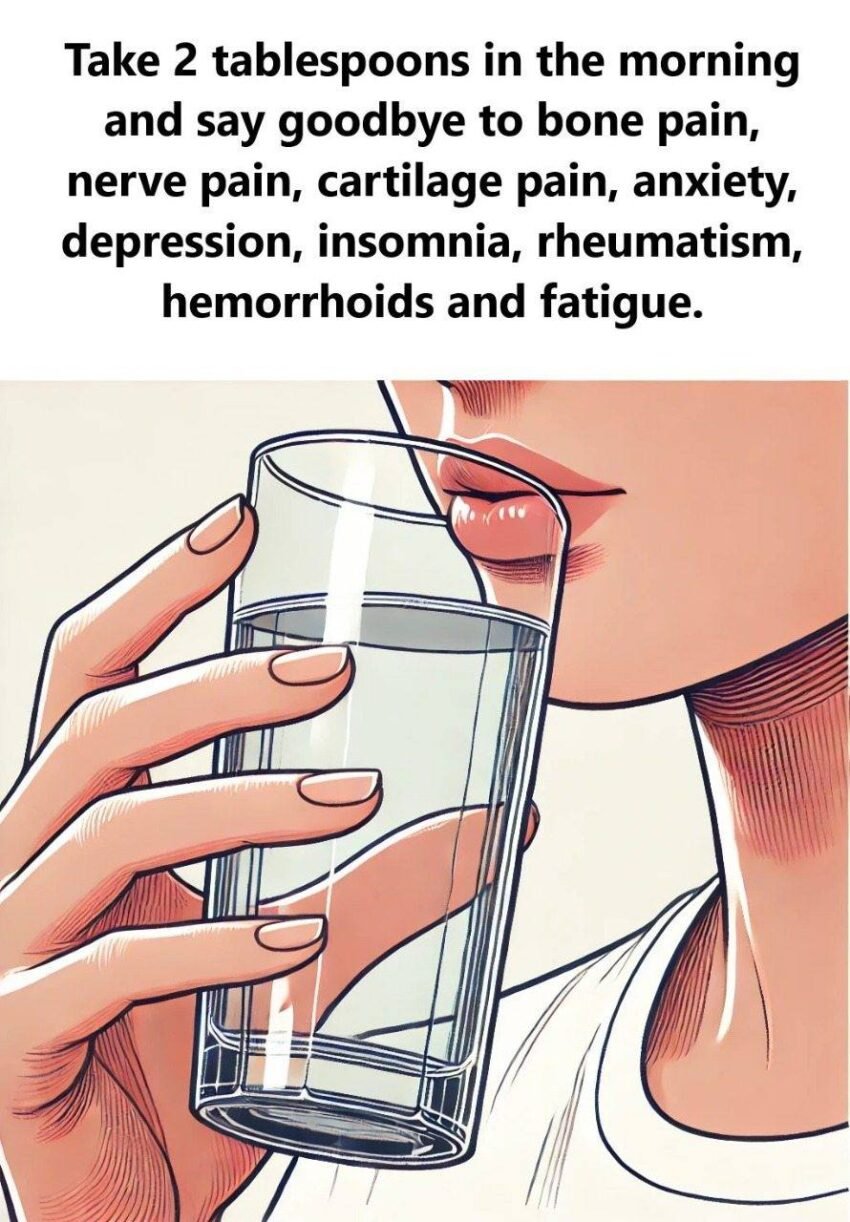
🔥 “Two Spoons in the Morning”: Miracle Remedy or Misleading Myth? The Truth About This Popular Health Trend
Discover what “two spoons in the morning” really means, what it can (and can’t) do for bone pain, diabetes, nerves, and depression—backed by science.
You’ve probably seen it somewhere—maybe on social media, a YouTube video, or forwarded in a family WhatsApp group:
“Take two spoons every morning and heal bone pain, diabetes, nerve damage, and even depression.”
It sounds almost too simple. No prescriptions. No complicated routines. Just… two spoons.
Naturally, people are curious—and hopeful. When something promises relief from multiple serious conditions in such an easy way, it taps into a deep desire: a natural, affordable solution that actually works.
But here’s the catch: not everything that sounds natural is effective—and not everything effective is as simple as two spoons.
Let’s unpack what this trend really is, what ingredients are usually involved, what science says, and how you can make smarter, safer decisions for your health.
What Does “Two Spoons in the Morning” Actually Mean?
This phrase isn’t a medical term. It’s more of a viral concept.
In most cases, it refers to taking two spoonfuls of a natural mixture—often one of the following:
- Honey + cinnamon
- Apple cider vinegar + honey
- Black seed (Nigella sativa) + honey
- Olive oil + lemon juice
- Turmeric + warm water or milk
Different versions claim to target different issues, but they’re often bundled together as a “cure-all.”
That’s where things start to get shaky.
Why This Trend Is So Popular (Especially in the U.S. and Beyond)
There’s a reason this idea spreads fast:
1. It Feels Empowering
People want control over their health without relying entirely on medications.
2. It’s Affordable
Compared to healthcare costs in the U.S., a kitchen remedy feels accessible.
3. It’s Natural
There’s growing skepticism around pharmaceuticals, even when they’re necessary.
4. It Promises Multiple Benefits
Bone pain, diabetes, nerves, depression—these are serious conditions. A single solution is appealing.
But here’s the reality: complex health conditions rarely have one simple fix.
Breaking Down the Claims (What Science Actually Says)
Let’s examine each claim carefully.
🦴 Bone Pain Relief
Some ingredients in these mixtures—like turmeric and olive oil—have anti-inflammatory properties.
- Turmeric contains curcumin, which has been studied for reducing inflammation.
- Olive oil includes healthy fats that may support joint health.
But here’s the truth:
These may help mild inflammation, but they are not a treatment for chronic bone conditions like arthritis or osteoporosis.
🩸 Diabetes Control
Ingredients like cinnamon and apple cider vinegar have been studied for their effect on blood sugar.
- Cinnamon may improve insulin sensitivity (in small amounts).
- Apple cider vinegar can slightly reduce post-meal blood sugar spikes.
However:
They are not substitutes for diabetes management plans, medications, or lifestyle changes.
Relying solely on them can actually be dangerous.
⚡ Nerve Health
Black seed and certain oils contain antioxidants that support general health.
But nerve-related conditions—like neuropathy—are complex and often require:
- Medical evaluation
- Targeted treatment
- Long-term management
A spoonful of anything won’t reverse nerve damage.
🧠 Depression & Mood
Some ingredients may support mood indirectly:
- Omega fats (from oils) can support brain health
- Honey can provide a quick energy boost
But depression is not just about nutrients.
It involves brain chemistry, environment, stress, and sometimes trauma.
No spoon-based remedy replaces therapy, medication, or professional care.
The Real Benefit: Where This Habit Can Help
Now here’s the balanced view.
While the claims are exaggerated, the habit itself isn’t useless.
Taking a small daily mixture of healthy ingredients can:
- Improve digestion
- Provide antioxidants
- Encourage a consistent morning routine
- Reduce reliance on processed sugar (if replacing unhealthy foods)
So yes—it can support overall wellness.
Just not in the dramatic way it’s often advertised.
Step-by-Step: A Safer Way to Use This Habit
If you still want to try a “two spoons” routine, here’s a smarter approach.
Step 1: Choose a Simple, Safe Base
Example:
- 1 spoon honey
- 1 spoon warm water or lemon water
Optional additions:
- A pinch of turmeric
- A dash of cinnamon
Step 2: Keep Quantities Moderate
Too much of even natural ingredients can cause problems:
- Excess honey = blood sugar spikes
- Too much turmeric = stomach irritation
Step 3: Use It as a Supplement, Not a Replacement
Continue:
- Prescribed medications
- Doctor visits
- Proper diet and exercise
Step 4: Monitor Your Body
Pay attention to:
- Energy levels
- Digestion
- Blood sugar (if diabetic)
If something feels off, stop.
Real-Life Scenario
Maria, a 52-year-old in California, started taking honey and cinnamon every morning after seeing it online.
At first, she felt better—more energized. But she also:
- Started skipping her diabetes medication
- Assumed the remedy was “working”
A few months later, her blood sugar levels spiked dangerously.
What went wrong?
Not the remedy itself—but the belief that it could replace medical care.
Comparison Table: Reality vs. Claims
| Claim | Reality |
|---|---|
| Cures diabetes | May slightly support blood sugar control |
| Heals nerve damage | No scientific evidence |
| Eliminates bone pain | May reduce mild inflammation only |
| Treats depression | No clinical effectiveness |
| Works for everyone | Effects vary widely |
| Replaces medication | Absolutely not |
Pros & Cons
✅ Pros
- Easy to incorporate into routine
- Uses accessible ingredients
- May support general wellness
- Encourages mindful eating habits
❌ Cons
- Overhyped claims
- Risk of replacing real treatment
- Not personalized
- Can mislead vulnerable individuals
Common Mistakes (And How to Avoid Them)
Mistake #1: Treating It Like a Cure
Fix: Think of it as a supplement, not a solution.
Mistake #2: Overconsumption
Fix: Stick to small amounts.
Mistake #3: Ignoring Medical Advice
Fix: Always prioritize professional care.
Mistake #4: Expecting Fast Results
Fix: Real health improvements take time and consistency.
Expert-Level Insight
Here’s something most people don’t realize:
The routine itself might be more powerful than the ingredients.
Waking up, taking something intentional, starting your day with a small health-focused action—it creates a psychological shift.
That shift often leads to:
- Better food choices
- More awareness
- Healthier habits overall
In other words, the habit works—not because it’s magical, but because it changes behavior.
2026 Health Trend Insight
There’s a growing shift toward:
- Personalized nutrition
- Evidence-based natural remedies
- Integration of traditional and modern medicine
The future isn’t about rejecting natural remedies—it’s about using them intelligently alongside science.
❓ Frequently Asked Questions
1. Can two spoons in the morning cure diseases?
No. It can support wellness but not cure medical conditions.
2. Is honey and cinnamon safe daily?
In small amounts, yes—unless you have allergies or blood sugar concerns.
3. Can I stop my medication if I feel better?
No. Always consult a healthcare professional first.
4. What’s the best combination to use?
There’s no “best.” Keep it simple and safe.
5. Does it help with weight loss?
It may support metabolism slightly but won’t cause significant weight loss alone.
6. Can it improve mood?
Indirectly, yes—but not as a treatment for depression.
7. Is apple cider vinegar safe daily?
In diluted form, yes—but excessive use can harm teeth and stomach.
8. How long should I try it?
A few weeks is fine, as long as you monitor your response.
9. Is it safe for everyone?
Not always—especially for people with chronic conditions.
10. What matters more than this remedy?
Diet, sleep, exercise, and medical care.
🧾 Action Checklist
✅ What To Do
- Use natural mixtures in moderation
- Keep expectations realistic
- Maintain medical treatments
- Focus on overall lifestyle improvements
- Stay informed with credible sources
❌ What To Avoid
- Believing “miracle cure” claims
- Replacing prescribed medication
- Overusing ingredients
- Ignoring symptoms
- Following viral advice blindly
🏁 Conclusion
“Two spoons in the morning” isn’t a miracle cure—but it’s not completely useless either.
At its best, it’s a small, supportive habit. At its worst, it’s a misleading shortcut that distracts from real care.
Your health deserves more than viral promises. It deserves informed decisions, balanced habits, and—when needed—professional guidance.
Two spoons can support your routine—but they won’t replace real treatment for serious conditions.
If this helped clarify things, share it with someone who’s considering trying this trend—and explore smarter, science-backed ways to take control of your health.