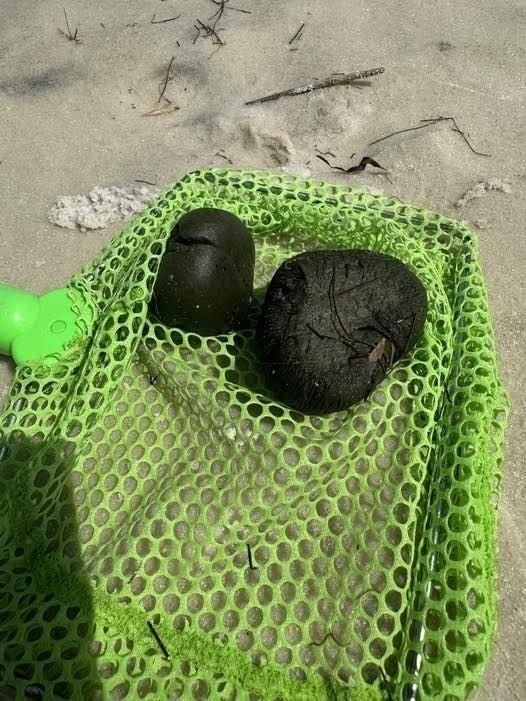
What Are These “Sea Blobs” in Pensacola Waters? The Soft, Green Underwater Mystery Parents Keep Finding
Discover what those round, spongey dark green “sea blobs” in Pensacola, Florida waters really are—likely harmless marine creatures called tunicates.
If you’ve ever been out near the bayside waters of Pensacola, Florida, you’re not alone in doing a double take.
Round. Soft. Sponge-like. Dark green. Sitting quietly underwater like something between a plant and a living stress ball.
Kids call them “sea blobs.” Adults usually just shrug and move on.
But curiosity has a way of sticking.
So what are these strange underwater lumps really?
The answer is more interesting—and more natural—than most people expect.
First Things First: They’re Not Trash or Sea Gunk
At first glance, it’s easy to assume these are:
- Seaweed clumps
- Sponge growth
- Or even man-made debris covered in algae
But in most cases around coastal Florida bays, especially places like Pensacola Bay, these “sea blobs” are actually living marine animals.
Yes—animals.
Just not the kind you’d recognize at first sight.
The Most Likely Culprit: Sea Pork (A Type of Tunicate)
The strongest match for what kids are calling “sea blobs” is something commonly known as sea pork.
Scientifically, these belong to a group of marine animals called tunicates (also known as sea squirts).
One common species in the Gulf region is Aplidium stellatum.
What makes sea pork so confusing?
- It looks like a soft, rubbery blob
- Often green, brown, or yellowish
- Feels spongy or jelly-like
- Doesn’t resemble a “typical animal” at all
From a distance, it looks like something washed up from another world.
Up close, it’s even stranger.
What Exactly Is a Tunicate?
Tunicates are marine filter feeders.
That means they:
- Sit attached to underwater surfaces
- Pull water through their bodies
- Filter out plankton and nutrients
- Excrete clean water back out
Even though they look like plants or sponges, tunicates are actually closer to vertebrates (animals with backbones) in evolutionary terms than most other invertebrates.
That’s one of the most surprising facts about them.
Why Do They Look Round and Sponge-Like?
What you’re seeing is actually a colony of tiny organisms working together.
Each bump or section inside the blob is an individual zooid (a tiny animal unit).
Together, they form:
- Soft rounded masses
- Gel-like textures
- Irregular clumps attached to docks, rocks, or submerged structures
That “spongey” feeling comes from their internal structure, which is designed to let water flow through easily.
Why Are They Dark Green?
The greenish color usually comes from a combination of:
- Algae living on the surface
- Environmental pigments
- Organic material trapped in the colony
Because they sit in nutrient-rich bay waters, they often blend in with surrounding seaweed and seagrass.
Are They Dangerous?
Short answer: No. They are harmless.
You can safely observe them in their natural environment.
However:
- Don’t try to eat or handle them excessively
- Some species can release mild chemicals if disturbed
- They may have a slimy texture that feels unpleasant
But they are not venomous, aggressive, or harmful to humans.
Why Kids Notice Them First
There’s a reason children often name them before adults do.
“Sea blobs” stand out because they don’t match expectations.
Kids notice:
- Shapes that don’t make sense
- Weird textures underwater
- “Living things” that don’t move like fish
Adults tend to filter these out as “just sea stuff.”
But kids see them for what they are: unusual and interesting.
Other Possible Lookalikes (Less Common)
While sea pork is the most likely explanation, there are a few other possibilities in Florida coastal waters:
1. Sea Sponges
- More structured internally
- Often firmer
- Can appear greenish depending on algae
2. Colonial Ascidians
- Closely related to tunicates
- May form flat or irregular mats
3. Algae Clumps
- Not animals
- Usually lighter, more plant-like
However, the round, soft, spongey “blob” description strongly points to tunicates.
Real-Life Observation in Pensacola Waters
In shallow bays around Pensacola:
- Calm water encourages colony growth
- Submerged wood and docks provide attachment points
- Nutrient-rich conditions support filter feeders
That’s why these “sea blobs” often appear in clusters rather than alone.
You might see:
- One large blob
- Or several grouped together like underwater fruit
It’s a small ecosystem doing its thing quietly beneath the surface.
Why They Matter in the Ecosystem
Even though they look strange, tunicates play an important role:
- They clean the water by filtering particles
- They provide habitat for small marine life
- They contribute to nutrient cycling in coastal ecosystems
In simple terms:
They help keep the water healthier.
Common Mistakes People Make
Mistake 1: Thinking it’s garbage or pollution
→ It’s actually living marine life
Mistake 2: Trying to remove it
→ It disrupts the ecosystem
Mistake 3: Assuming it’s dangerous
→ It’s harmless and passive
Mistake 4: Ignoring it completely
→ You miss a fascinating part of coastal biology
Quick Identification Checklist
If you see a “sea blob” in Pensacola waters, ask:
✔ Is it soft and squishy?
✔ Is it attached underwater to a surface?
✔ Does it have a greenish or brownish tint?
✔ Does it not move like a fish or crab?
If yes → It’s very likely a tunicate colony (sea pork).
FAQ
1. What are “sea blobs” really called?
Most likely sea pork, a type of colonial tunicate.
2. Are they plants or animals?
They are animals—marine filter feeders.
3. Can you touch them?
Yes, but it’s not recommended. They can feel slimy and delicate.
4. Are they common in Florida?
Yes, especially in shallow coastal bays like Pensacola Bay.
5. Do they move?
Not in a visible way. They stay attached to surfaces.
6. Are they harmful to humans?
No, they are harmless.
7. Why are they green?
Algae and environmental pigments contribute to their color.
8. Do fish eat them?
Most predators avoid them due to their texture and chemical defenses.
9. Can they survive out of water?
Only briefly—they are marine organisms.
10. Why do they form blobs?
They grow in colonies, merging into shared structures.
Conclusion
What looks like a strange underwater “blob” is actually a quiet, complex living organism doing its job in the ecosystem.
Sea pork and other tunicates remind us that the ocean doesn’t always fit into neat categories like “plant” or “animal” or “familiar.”
Sometimes it just looks like a soft green mystery floating beneath the surface.
Those “sea blobs” in Pensacola waters are most likely harmless colonial tunicates—living marine animals quietly filtering and cleaning the bay.
Next time your kids point one out, you’ll have a better answer than “I’m not sure.”
And honestly… it’s even more interesting than it looks.