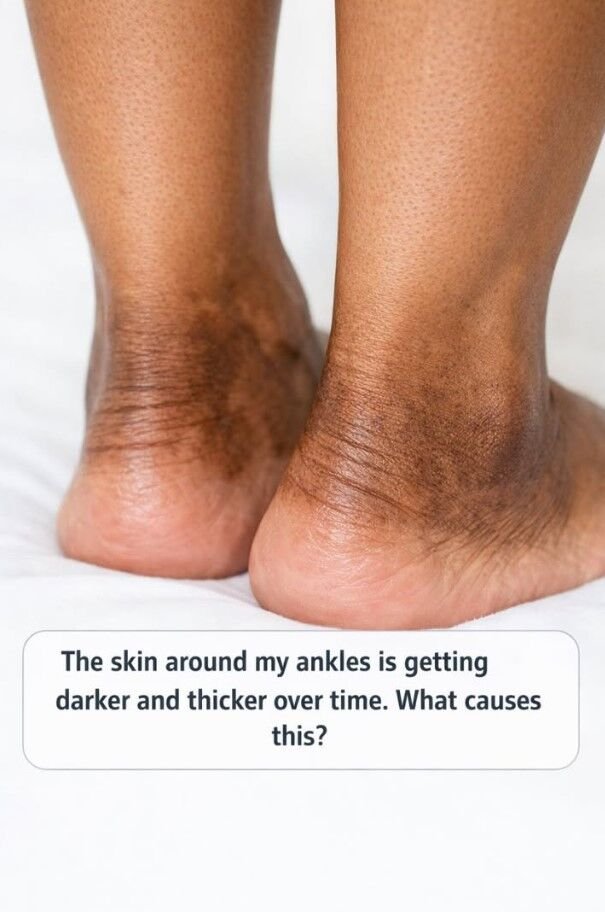
Why the Skin Around Your Ankles Is Getting Darker and Thicker (And What It Could Mean for Your Health)
Noticing dark, thick skin around your ankles? Discover the real causes—from friction to hidden health issues—and what you can do to fix it.
At first, it’s subtle.
Maybe you notice your ankles look slightly darker than usual. Then the skin starts to feel… thicker. Rougher. A bit uneven.
You brush it off—maybe it’s just dryness, right?
But over time, it doesn’t go away. In fact, it gets more noticeable.
Here’s the truth: when skin around your ankles becomes darker and thicker, it’s not always just a cosmetic issue. In some cases, it can be your body quietly signaling something deeper.
This guide breaks down what’s really happening, why it matters, and exactly what you should do next.
What’s Actually Happening to Your Skin?
When skin becomes both darker (hyperpigmented) and thicker (called lichenification), it usually means one thing:
Your skin is reacting to repeated stress—internally or externally.
This can come from:
- Friction
- Hormonal shifts
- Circulatory issues
- Metabolic changes
The tricky part? Different causes can look very similar on the surface.
9 Common Causes of Dark, Thick Skin Around the Ankles
1. Acanthosis Nigricans (A Major Red Flag)
One of the most important conditions to consider is Acanthosis nigricans.
It causes:
- Dark, velvety, thickened skin
- Often around ankles, neck, armpits, or groin
Why it matters:
It’s strongly linked to insulin resistance—a precursor to Type 2 Diabetes.
If this is the cause, it’s not just a skin issue—it’s metabolic.
2. Chronic Friction and Pressure
Tight shoes, socks, or frequent rubbing can trigger the skin to protect itself by thickening.
Over time:
- Skin becomes rough and leathery
- Pigment increases in the affected area
This is especially common if you:
- Wear restrictive footwear
- Sit cross-legged frequently
- Have repetitive ankle movement
3. Poor Circulation (Venous Insufficiency)
Your lower legs rely on strong blood flow to stay healthy.
When circulation is compromised, it can lead to:
- Dark discoloration
- Swelling
- Thickened, hardened skin
This is often linked to Chronic Venous Insufficiency.
4. Eczema or Chronic Skin Irritation
Conditions like Eczema can cause repeated inflammation.
Repeated scratching or irritation leads to:
- Thickened skin
- Dark patches
- Itching
Over time, this becomes a cycle that worsens itself.
5. Post-Inflammatory Hyperpigmentation
After any skin irritation—rash, insect bites, or minor injuries—the skin may heal darker than before.
This is known as:
- Post-inflammatory hyperpigmentation
It’s more noticeable in medium to darker skin tones.
6. Obesity and Skin Changes
Excess weight increases:
- Friction in skin folds
- Insulin resistance
This combination can lead to both thickening and darkening, especially around joints like ankles.
7. Hormonal Imbalances
Hormones influence pigmentation more than most people realize.
Conditions like:
- Polycystic ovary syndrome (PCOS)
- Thyroid disorders
Can subtly affect skin texture and color over time.
8. Fungal or Bacterial Infections
Chronic infections—especially in warm, moist environments—can alter skin appearance.
Look for:
- Itching
- Scaling
- Unusual odor
If untreated, these can lead to thickened, discolored skin.
9. Neglected Skin Care (Yes, It Matters)
Simple but overlooked:
- Dryness
- Lack of exfoliation
- Poor hygiene
Can gradually lead to buildup of dead skin cells, making the area appear darker and thicker.
Why You Shouldn’t Ignore It
It’s easy to treat this as a cosmetic annoyance.
But depending on the cause, it could signal:
- Blood sugar problems
- Circulatory issues
- Chronic inflammation
Catching these early can prevent much bigger health problems later.
Step-by-Step: How to Fix It (Based on Cause)
Step 1: Identify the Pattern
Ask yourself:
- Is it itchy?
- Is it spreading?
- Is it symmetrical on both ankles?
Patterns give clues.
Step 2: Improve Daily Skin Care
Start with basics:
- Gentle cleansing
- Regular moisturizing (look for urea or lactic acid creams)
- Mild exfoliation 2–3 times per week
Step 3: Reduce Friction
- Switch to comfortable, breathable footwear
- Avoid tight socks
- Use protective padding if needed
Step 4: Address Internal Triggers
If you suspect metabolic causes:
- Get blood sugar tested
- Monitor weight and diet
- Increase physical activity
Step 5: Seek Medical Advice When Needed
Consult a doctor if:
- The skin becomes very thick or velvety
- There’s swelling or pain
- It worsens despite home care
Real-Life Scenario
Jessica, a 42-year-old office worker, noticed her ankles getting darker over a year.
She assumed it was dryness—until the skin started thickening.
After a routine check-up, she discovered early insulin resistance.
By adjusting her diet and activity levels, not only did her skin improve—but she prevented progression toward diabetes.
Sometimes the skin reveals what blood tests haven’t yet.
Comparison: Harmless vs. Concerning Signs
| Symptom | Likely Cause | Concern Level |
|---|---|---|
| Mild dryness, slight darkening | Skin neglect | Low |
| Thick, velvety texture | Acanthosis nigricans | High |
| Swelling + discoloration | Circulatory issue | High |
| Itchy, flaky patches | Eczema or infection | Moderate |
Pros and Cons of Common Treatments
Topical Creams
Pros: Easy, accessible
Cons: May not address root cause
Medical Treatment
Pros: Targets underlying issue
Cons: Requires diagnosis
Lifestyle Changes
Pros: Long-term improvement
Cons: Takes time and consistency
Common Mistakes People Make
Mistake #1: Scrubbing Too Hard
Fix: Gentle exfoliation only
Mistake #2: Ignoring Early Signs
Fix: Monitor changes over time
Mistake #3: Using Harsh Chemicals
Fix: Stick to dermatologist-approved products
Mistake #4: Treating Only the Surface
Fix: Look for internal causes too
Expert Insight Most People Miss
Skin changes around joints—like ankles—are rarely random.
They often occur in areas where:
- Blood flow is challenged
- Friction is high
- Metabolic signals show up early
In other words, your ankles can act like an early warning system.
2026 Skin Health Trends
- Personalized dermatology using AI diagnostics
- Increased focus on gut-skin connection
- Non-invasive pigmentation treatments gaining popularity
- Preventative skin health becoming mainstream
Future Outlook
Expect more integration between dermatology and metabolic health.
Skin won’t just be treated as surface-level—it will be a diagnostic tool.
FAQ Section
Why are my ankles darker than the rest of my body?
This is usually due to friction, pigmentation changes, or underlying health conditions.
Is dark ankle skin permanent?
Not always. It depends on the cause and how early it’s treated.
Can diabetes cause dark ankles?
Yes—especially through insulin resistance and acanthosis nigricans.
How long does it take to lighten the skin?
It can take weeks to months, depending on treatment and cause.
Are home remedies effective?
They can help mildly, but may not work for deeper causes.
Should I exfoliate daily?
No—2–3 times per week is enough.
When should I see a doctor?
If the condition worsens, spreads, or is accompanied by other symptoms.
Can weight loss help?
Yes, especially if insulin resistance is involved.
Is this a fungal infection?
It could be—especially if there’s itching or scaling.
What creams work best?
Look for ingredients like urea, salicylic acid, or lactic acid.
Action Checklist
What To Do
✔ Monitor changes in skin texture and color
✔ Maintain proper skin hygiene
✔ Use gentle exfoliation and moisturizers
✔ Check for underlying health conditions
✔ Wear comfortable footwear
What To Avoid
✘ Ignoring persistent changes
✘ Over-scrubbing the area
✘ Using harsh, unverified treatments
✘ Assuming it’s “just dryness”
Conclusion
Dark, thick skin around your ankles isn’t just about appearance—it’s information.
Sometimes it’s simple. Sometimes it’s a signal.
The key is knowing the difference.
Pay attention. Take action early. And don’t hesitate to get clarity when needed.
Because your skin doesn’t just reflect your environment—it reflects your internal health.
If your ankles are getting darker and thicker over time, don’t ignore it. The cause might be skin-deep—or something much more important.
If you’ve noticed similar changes, share your experience or questions below.