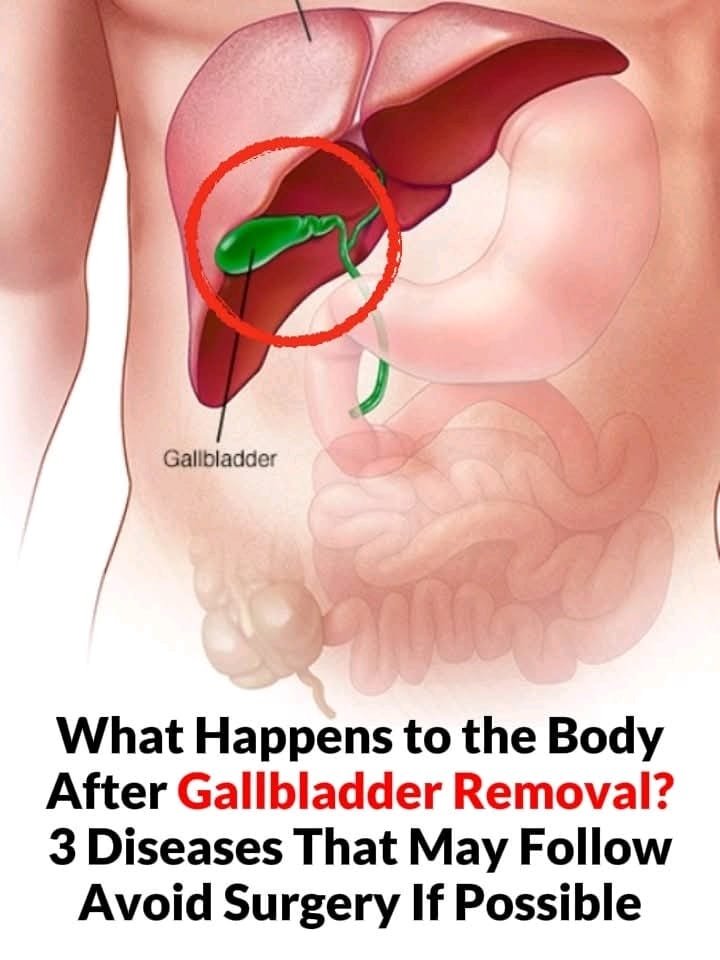
What Happens to the Body After Gallbladder Removal? 3 Conditions That May Follow and What Most People Aren’t Told
Discover what really happens after gallbladder removal, 3 possible conditions that may follow, and how to manage long-term digestive changes effectively.
For many people, gallbladder removal feels like the end of a painful chapter—gallstones, sudden attacks, emergency visits, and the constant fear of another flare-up.
Then surgery happens. Relief follows… at first.
But weeks or months later, something unexpected shows up for some patients: unpredictable digestion, new food sensitivities, or symptoms they were never warned about in detail.
This is where confusion begins.
Why are bowel habits different now?
Why does fatty food suddenly feel “unsafe”?
And why do some people feel worse even after a surgery that was supposed to fix everything?
Gallbladder removal (cholecystectomy) is one of the most common surgeries in the United States, and for many it works well. But the body doesn’t simply “reset” after the gallbladder is gone—it adapts. And that adaptation is where a small but important group of complications can emerge.
In this article, we’ll break down exactly what happens inside the body after gallbladder removal, the three most commonly reported post-surgery conditions, and what practical steps people take to regain digestive stability.
Not fear. Not hype. Just what actually tends to happen—and how to handle it wisely.
Understanding the Gallbladder’s Role (Before and After Surgery)
The gallbladder is a small, pear-shaped organ tucked under the liver. Its main job is simple: store and concentrate bile.
Bile is produced by the liver and helps digest fats. When you eat a meal—especially something fatty—the gallbladder contracts and releases a concentrated burst of bile into the small intestine.
After gallbladder removal, this storage system disappears.
Instead of “stored and released on demand,” bile now drips continuously from the liver into the intestines.
That single change explains most post-surgery digestive shifts.
For many people, the body adjusts smoothly. For others, the digestive system takes longer to stabilize—or develops new symptoms that persist.
Why This Matters More Than Most People Expect
In the United States alone, hundreds of thousands of gallbladder removals are performed each year, often due to gallstones or inflammation. It’s considered routine surgery.
But what often gets less emphasis is the long-term digestive adaptation phase.
Here’s why it matters:
- Bile flow becomes continuous instead of controlled
- Fat digestion becomes less “timed”
- Gut bacteria composition may shift
- Some people experience chronic bowel changes
Ignoring these changes doesn’t usually cause life-threatening issues—but it can significantly affect quality of life.
Fatigue after meals, unpredictable digestion, bloating, and urgency are the most commonly reported concerns.
And while not everyone experiences complications, understanding them early makes a major difference in managing them effectively.
The 3 Conditions That May Follow Gallbladder Removal
Let’s be clear: these are not guaranteed outcomes. They are possible post-surgical conditions seen in a subset of patients.
1. Postcholecystectomy Syndrome (PCS)
This is the umbrella term doctors use when symptoms persist after gallbladder removal.
It’s not a single disease—it’s a cluster of digestive issues that can include:
- Abdominal discomfort
- Bloating or gas
- Diarrhea or irregular stools
- Nausea after meals
- Food intolerance (especially fatty foods)
Why it happens:
After surgery, bile flow is no longer regulated. In some people, this leads to irritation in the intestines or bile ducts. In others, residual stones or functional digestive changes may contribute.
PCS can appear immediately after surgery or even months later.
Important insight: PCS is often temporary, but in some cases it becomes chronic if underlying bile flow or gut issues are not addressed.
2. Bile Acid Diarrhea (BAD)
One of the most underdiagnosed post-gallbladder issues is bile acid diarrhea.
Here’s what happens:
Without the gallbladder storing bile, excess bile acids can enter the colon. These acids irritate the intestinal lining, pulling water into the bowel and leading to frequent, urgent diarrhea.
Common symptoms:
- Sudden urgency after eating
- Loose or watery stools
- Symptoms worse after fatty meals
- Relief when fasting or eating very low-fat foods
Why it matters:
This condition is often mistaken for IBS (Irritable Bowel Syndrome), which leads to mismanagement.
According to clinical gastroenterology research (including guidance referenced by institutions like the Mayo Clinic), bile acid malabsorption is a recognized but frequently overlooked cause of chronic diarrhea after gallbladder removal.
Treatment often includes bile acid binders and dietary adjustments—not antibiotics or general IBS medications.
3. Small Intestinal Bacterial Overgrowth (SIBO)
After gallbladder removal, some individuals experience changes in gut motility and bile concentration, which can indirectly affect gut bacteria balance.
This can create an environment where bacteria grow in places they normally shouldn’t.
Symptoms of SIBO include:
- Bloating within hours of eating
- Excessive gas
- Nutrient malabsorption
- Fatigue after meals
- Alternating constipation and diarrhea
The connection isn’t guaranteed, but studies suggest altered bile flow may reduce natural antimicrobial activity in the gut, increasing susceptibility in some individuals.
SIBO is often misdiagnosed as IBS, leading to delayed treatment.
How the Body Adapts Over Time
The human body is remarkably adaptive. After gallbladder removal, the liver gradually adjusts bile production patterns.
For many people:
- Fat digestion improves over time
- Bowel patterns stabilize
- Food tolerance expands again
This adaptation period can take weeks to months, sometimes longer depending on diet, gut health, and lifestyle.
Step-by-Step Digestive Recovery Approach
While each case is different, many people find improvement with structured adjustments:
Step 1: Reduce fat load per meal
Instead of large fatty meals, smaller distributed fat intake helps the liver-bile system adapt.
Step 2: Rebuild gut rhythm
Regular meal timing supports intestinal motility.
Step 3: Identify trigger foods
Common triggers include fried foods, heavy dairy, and processed fats.
Step 4: Support bile flow naturally
Hydration, fiber intake, and moderate physical activity can help regulate digestion.
Step 5: Medical evaluation if symptoms persist
Persistent diarrhea or pain should be evaluated for bile acid malabsorption or SIBO.
Real-World Example Scenario (USA Context)
A 42-year-old office worker in Texas undergoes gallbladder removal after repeated gallstone attacks.
Initial recovery is smooth.
Two months later:
- Urgent diarrhea after lunch
- Fear of eating outside food
- Fatigue during work hours
Initially diagnosed with IBS, treatment doesn’t help.
Later evaluation reveals bile acid diarrhea.
After targeted treatment and dietary adjustment, symptoms improve significantly.
This pattern—misdiagnosis followed by correction—is more common than most people realize.
Comparison Table: Digestive Function Changes
| Function | Before Gallbladder Removal | After Gallbladder Removal |
|---|---|---|
| Bile release | Stored & controlled | Continuous flow |
| Fat digestion | Efficient after meals | Variable efficiency |
| Stool pattern | Stable | May become irregular |
| Meal tolerance | Broad | Temporarily reduced in some |
| Gut bacteria balance | Stable | Can shift temporarily |
Pros and Cons of Gallbladder Removal
Pros
- Relief from gallstone pain
- Prevention of gallbladder infection
- Eliminates risk of gallstone recurrence
- Improved quality of life for many
Cons
- Digestive adaptation period
- Risk of bile acid diarrhea
- Possible chronic GI sensitivity in some
- Dietary restrictions (temporary or long-term for some)
Common Mistakes After Surgery
1. Eating high-fat meals too soon
This overwhelms the bile system before adaptation occurs.
2. Ignoring persistent diarrhea
Assuming it is “normal recovery” delays proper treatment.
3. Self-diagnosing IBS too early
Many post-surgery symptoms overlap with IBS but have different causes.
4. Eliminating all fats completely
This can worsen digestion long-term. The goal is balance, not elimination.
Expert-Level Insights Most Patients Don’t Hear
- Bile is not just for fat digestion—it also influences gut bacteria balance
- The liver continues producing bile constantly after surgery
- Symptoms often reflect regulation issues, not organ failure
- Gut adaptation is highly individualized—no single recovery timeline fits all
Gastroenterology references, including patient guidance from organizations like the Cleveland Clinic, emphasize that most post-cholecystectomy symptoms are manageable with targeted care rather than generalized dietary restriction.
2026 Trends in Post-Gallbladder Care
Recent developments in digestive care include:
- Better recognition of bile acid malabsorption
- Improved diagnostic testing for post-surgery diarrhea
- More personalized nutrition protocols
- Increased focus on gut microbiome recovery
- Minimally invasive follow-up procedures when needed
The shift is moving away from “you’re fine, it’s normal” toward more precise digestive mapping.
Future Outlook
As research improves, post-gallbladder care is expected to become more personalized.
Instead of generic advice, future protocols may include:
- Bile flow profiling
- Microbiome analysis
- Targeted enzyme or bile acid therapies
- Diet plans based on metabolic response
The goal is not just survival after surgery—but stable long-term digestion.
Mini Case Story
A retired teacher in California struggled for nearly a year after gallbladder removal. She avoided social events due to unpredictable digestion.
After proper evaluation, she was found to have bile acid malabsorption—not IBS.
With targeted treatment and dietary restructuring, her symptoms reduced significantly within weeks.
Her takeaway was simple: “I wish I knew what to look for earlier.”
Frequently Asked Questions
1. Is life normal after gallbladder removal?
Yes, for most people. The body adapts over time, though some need dietary adjustments.
2. How long does digestion take to stabilize?
Anywhere from a few weeks to several months, depending on the individual.
3. Can I eat fatty foods again?
Yes, but tolerance varies. Many people gradually reintroduce fats in moderation.
4. Is diarrhea after surgery normal?
Short-term changes are common, but persistent diarrhea should be evaluated.
5. What is postcholecystectomy syndrome?
A collection of digestive symptoms that may occur after gallbladder removal.
6. Can gallbladder removal cause IBS?
It doesn’t directly cause IBS, but symptoms can mimic or overlap with it.
7. Do all patients get complications?
No. Many recover without long-term issues.
8. What is the most common long-term issue?
Bile acid diarrhea is among the most frequently underdiagnosed conditions.
9. Should I avoid surgery if I have gallstones?
Surgery decisions depend on severity and medical evaluation. It is not appropriate for everyone to avoid it.
10. When should I see a doctor after surgery?
If symptoms persist beyond a few weeks or significantly affect daily life.
Action Checklist
What to do:
- Eat smaller, balanced meals
- Monitor fat intake initially
- Track digestive symptoms
- Stay hydrated
- Seek evaluation if symptoms persist
What to avoid:
- High-fat meals immediately after surgery
- Self-diagnosing long-term conditions too early
- Ignoring chronic diarrhea or pain
- Completely eliminating dietary fats
Conclusion
Gallbladder removal can be life-changing in a positive way for many people, especially those suffering from severe gallstones or inflammation. But the story doesn’t always end in the operating room.
For some, the body enters a long adjustment phase where digestion behaves differently, sometimes unpredictably. Conditions like postcholecystectomy syndrome, bile acid diarrhea, and SIBO can emerge—but they are manageable when properly understood.
The key is awareness, not fear. Most people improve significantly once they identify what their body is actually responding to.
Gallbladder removal changes how bile flows, not whether your body can digest food. Understanding that difference is what turns confusion into control.
If this helped clarify your experience, share it with someone going through the same recovery—or explore more digestive health insights to better understand your body’s signals.