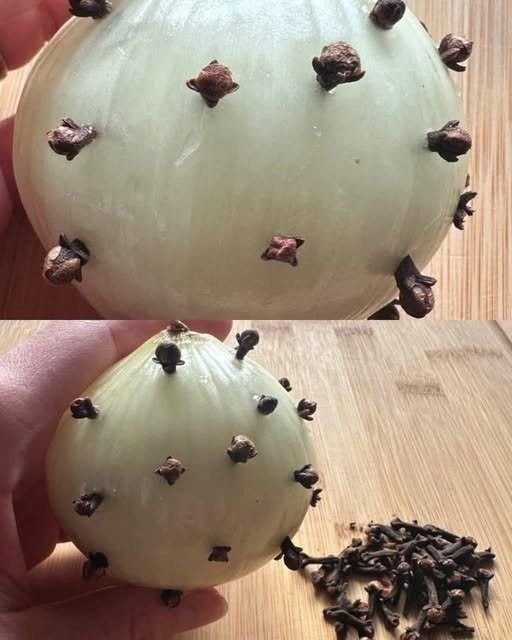
Why My French Grandmother Sticks Cloves Into an Onion—The Hidden Kitchen Trick That Changes Everything
Discover the traditional French cooking trick of sticking cloves into an onion, why it’s used in soups and sauces, and how it enhances flavor naturally.
Some kitchen habits look strange at first glance.
Like sticking whole cloves into an onion.
If you’ve never seen it before, it might even feel a little odd—almost unnecessary. But in many French kitchens, especially traditional home cooking, this simple technique has been quietly used for generations.
My French grandmother used to do it without explaining much.
Just onion. Whole cloves. Into the pot.
It wasn’t until much later that I understood why—and once I did, it completely changed how I approach soups, sauces, and slow-cooked dishes.
What Exactly Is This Trick?
The technique involves taking a peeled onion and inserting whole cloves (the spice) directly into it.
This combination is often called a “cloute onion” in French cooking, meaning “clove-studded onion.”
It’s commonly used in:
- Soups
- Broths
- Stews
- Cream sauces
- Béchamel sauce (a classic French white sauce)
At first glance, it looks decorative.
But it serves a very practical culinary purpose.
Why French Cooking Uses This Technique
In traditional French cuisine, flavor building is slow and intentional.
This onion-and-clove method is part of a foundational flavor base used in many recipes.
The goal is to create depth without overpowering the dish.
Let’s break it down.
1. It Adds Subtle Warm Spicing Without Overpowering
Cloves have a strong, warm, slightly sweet-spicy flavor.
But when inserted into an onion and simmered slowly, the intensity softens.
Instead of dominating the dish, it gently infuses the liquid.
The result:
- A deeper aroma
- A warmer taste profile
- A more rounded flavor base
2. It Enhances Soups and Stocks Naturally
In classic French cooking, flavor foundations matter.
A clove-studded onion is often added to milk-based sauces or broths to gently elevate the taste.
For example:
- In béchamel sauce, it reduces the “flatness” of milk
- In chicken stock, it adds complexity without spice overload
It’s a quiet enhancement—not something you directly taste, but something you would miss if it weren’t there.
3. It Makes Removing Spices Easy
Here’s a practical advantage most people overlook.
Instead of fishing out individual cloves from a pot, you simply remove the onion.
Everything comes out in one piece.
This keeps:
- Texture clean
- Flavor controlled
- Presentation smooth
4. It Reflects Traditional “Slow Cooking Logic”
This technique comes from a time when cooking was about layering flavor gradually.
Before modern seasoning shortcuts, cooks relied on:
- Aromatics
- Whole spices
- Long simmering times
The clove-studded onion is a perfect example of that philosophy.
Where This Trick Is Commonly Used
You’ll most often find it in classic French recipes such as:
- Béchamel sauce
- Chicken or vegetable stocks
- Cream-based soups
- Slow-cooked stews
It’s especially important in dishes where a clean, smooth texture is expected.
How to Use It Step by Step
You don’t need to be a professional chef to use this technique.
Step 1: Peel a Whole Onion
Use a medium-sized white or yellow onion.
Step 2: Insert Whole Cloves
Push 4–6 whole cloves into the onion evenly.
Step 3: Add to Your Dish
Place it directly into:
- Soup pot
- Saucepan
- Stock pot
Step 4: Simmer Slowly
Let it cook gently so flavors release over time.
Step 5: Remove Before Serving
Take out the onion before plating.
Real-Life Kitchen Example
Imagine making a simple chicken soup.
Without the clove onion:
- The broth tastes basic
- Aromas are flat
With the clove onion:
- The soup smells richer
- The flavor feels deeper
- The overall dish tastes more “restaurant-style”
Nothing dramatic changed—just one small step added depth.
Why It Surprises Most People
In modern cooking, we often rely on:
- Bouillon cubes
- Pre-mixed spices
- Fast flavor shortcuts
So a technique like this feels almost too simple.
But traditional cooking isn’t about complexity.
It’s about layering small details that quietly improve everything.
Common Mistakes to Avoid
1. Using Too Many Cloves
This can overpower the dish quickly.
Stick to a small number.
2. Crushing the Cloves
They should remain whole for controlled flavor release.
3. Leaving the Onion Too Long
Over-simmering can make flavors slightly bitter in delicate sauces.
Pros and Cons of This Technique
Pros
- Adds subtle depth to dishes
- Very easy to use
- No extra tools required
- Enhances traditional recipes naturally
Cons
- Easy to overdo cloves
- Not suitable for all flavor profiles
- Requires removal before serving
Expert Insight: Why It Works So Well
The science behind it is simple.
Cloves contain compounds like eugenol, which release slowly under heat.
The onion acts as a natural “carrier,” controlling how quickly those compounds enter the dish.
That’s why the flavor feels balanced rather than sharp.
Modern Cooking Trends (2026 Perspective)
Interestingly, this old technique is becoming relevant again.
As people move toward:
- Clean-label cooking
- Minimal ingredient recipes
- Traditional food methods
Simple techniques like clove-studded onions are being rediscovered by home cooks and chefs alike.
Frequently Asked Questions
1. What does sticking cloves in an onion do?
It slowly infuses dishes with mild spice and aroma.
2. Can I eat the onion afterward?
It’s usually discarded after flavoring the dish.
3. How many cloves should I use?
Typically 4–6 per onion is enough.
4. What dishes is it best for?
Soups, sauces, and slow-cooked meals.
5. Can I replace cloves with other spices?
Not in the same traditional way—cloves have a unique flavor profile.
6. Does it make food spicy?
No—it adds warmth, not heat.
7. Is this technique still used in modern cooking?
Yes, especially in French and European kitchens.
8. Why use whole cloves instead of ground?
Whole cloves release flavor slowly and are easier to remove.
Action Checklist
What to Do
✔ Use a fresh onion
✔ Insert 4–6 whole cloves
✔ Add to soups or sauces early
✔ Remove before serving
✔ Use for slow-cooked dishes
What to Avoid
✘ Overusing cloves
✘ Crushing spices
✘ Using in quick-cook recipes
✘ Leaving too long in delicate sauces
Conclusion
Sometimes the most surprising kitchen tricks are also the simplest.
A clove-studded onion may look unusual, but it carries generations of cooking wisdom—quietly enhancing flavor without effort or complexity.
Once you try it, you start to understand why traditional cooks never stopped using it.
Sticking cloves into an onion isn’t just a quirky habit—it’s a timeless technique for adding depth, warmth, and balance to everyday cooking.
If this changed the way you think about simple ingredients, share it—and try it in your next homemade soup.