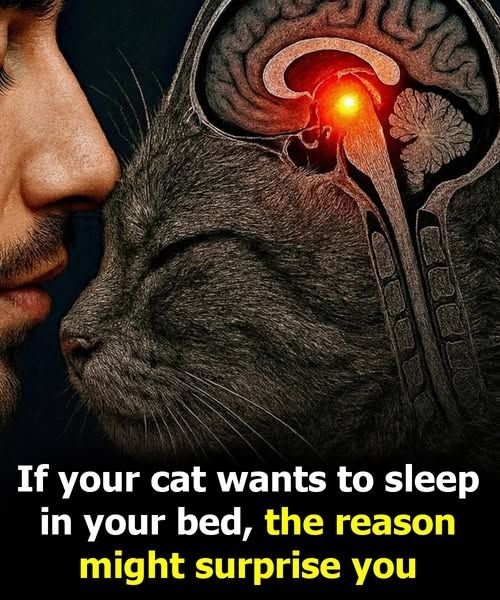
Why Your Cat Chooses to Sleep With You: 10 Surprising Reasons That Explain It
Wondering why your cat sleeps with you? Discover 10 real reasons behind this behavior—and what it reveals about your bond.
You finally settle into bed after a long day… and there it is again. Your cat curls up beside you like it owns the place. Maybe it presses against your chest. Maybe it insists on your pillow. Either way, it’s not random—and it’s definitely not just about warmth.
A lot of cat owners quietly wonder: Why me? Why every night? And more importantly… what does it mean?
Here’s the truth: when your cat chooses to sleep with you, it’s sending signals—about trust, comfort, instinct, and even your relationship dynamic. Some of those reasons are surprisingly emotional. Others are deeply rooted in feline survival behavior.
By the end of this guide, you’ll not only understand why your cat does it—you’ll see your nightly routine in a completely different way.
What Sleeping Together Really Means (Beyond “They Like You”)
At surface level, it feels simple: your cat likes you. But cats don’t operate on simple emotional cues the way dogs do. Their behaviors are layered with instinct, environmental awareness, and subtle communication.
Sleeping is one of the most vulnerable states for any animal. In the wild, it’s when predators strike. So when your cat chooses to sleep with you, it’s not casual—it’s calculated.
It means your presence has passed multiple internal “safety checks.”
And once that happens, something interesting shifts: your bed becomes shared territory.
Why This Matters (Especially for Cat Owners in Modern Homes)
In American households—where indoor cats are the norm—sleeping habits become one of the clearest indicators of your cat’s emotional state.
Ignoring these behaviors can lead to misunderstandings:
- You might misread clinginess as affection when it’s actually anxiety
- You might discourage bonding without realizing it
- You might overlook subtle health or behavioral cues
Understanding why your cat sleeps with you gives you a deeper lens into:
- Their sense of security
- Their social hierarchy perception
- Their physical comfort needs
- Their emotional attachment patterns
And yes—sometimes, their manipulation tactics.
10 Real Reasons Your Cat Sleeps With You
1. You Represent Safety (Not Just Comfort)
Your cat doesn’t just see you as cozy—they see you as a protector.
Even indoor cats retain a predator-prey mindset. Sleeping near you reduces perceived risk. Your size, scent, and presence create a “secure zone” in their brain.
If your cat chooses you consistently, it means:
- You’ve earned their trust at a deep level
- They believe you’ll alert them to danger
- Your presence lowers their stress response
That’s not casual affection—that’s survival-level trust.
2. Your Body Heat Is Prime Real Estate
Cats love warmth—it’s not a preference, it’s a biological need.
Your body acts like a steady, regulated heat source. Compared to couches or beds, you are the most reliable “warm spot” in the house.
That’s why you’ll notice:
- They gravitate to your chest or stomach
- They wedge under blankets
- They reposition based on your body heat
It’s efficient, instinctive, and—honestly—a little opportunistic.
3. They’re Strengthening Social Bonds
Cats don’t form packs like dogs—but they do form social bonds through proximity.
Sleeping together mimics how kittens sleep with their littermates and mother.
So when your cat curls up with you, it’s a throwback behavior that says:
“You’re part of my circle.”
This bonding mechanism releases calming neurochemicals (yes, even in cats), reinforcing attachment over time.
4. Your Scent Is Familiar and Reassuring
Cats rely heavily on scent to navigate their world.
Your smell becomes a constant marker of “home.” When they sleep near you, they’re surrounding themselves with that scent.
It helps them:
- Stay calm
- Reduce anxiety
- Reinforce territory recognition
If your cat sleeps on your clothes or pillow specifically, that’s not random—it’s scent-driven behavior.
5. They’re Marking You as Their Territory
Here’s the twist: your cat doesn’t just trust you—they also claim you.
Cats have scent glands on their face, paws, and body. When they rub, knead, or sleep against you, they’re subtly marking you.
Sleeping together is like leaving a scent signature overnight.
In cat logic, this means:
“You belong to me. Other cats, stay away.”
6. Your Bed Is the Quietest, Safest Zone
Think about your home from your cat’s perspective.
Your bed is:
- Elevated
- Soft
- Low traffic at night
- Predictable
Cats prefer stable environments when sleeping. Your bedroom, especially at night, offers exactly that.
It’s less about you in this case—and more about the environment you’ve created.
7. They Feel Emotionally Attached to You
Yes—cats form real emotional attachments. It just looks different from dogs.
Studies from institutions like Oregon State University have shown that cats can form secure attachments to humans similar to infants with caregivers.
Sleeping with you is one of the clearest expressions of that attachment.
Signs this is the reason:
- They follow you to bed every night
- They get restless if you’re not there
- They choose you over other people in the home
That’s not coincidence—it’s preference.
8. They Sync With Your Routine
Cats are creatures of habit. If you go to bed at a consistent time, they adapt.
Over time, your bedtime becomes part of their routine.
So even if affection started it, habit reinforces it.
You’ll notice:
- They show up at the same time nightly
- They “remind” you when it’s bedtime
- They get annoyed if you break the routine
This is less emotional—and more behavioral conditioning.
9. They Want Attention (Even While Sleeping)
Some cats use bedtime as an opportunity for uninterrupted attention.
You’re still, available, and not distracted by your phone or work.
This can show up as:
- Purring loudly
- Kneading
- Walking across your face at 2 a.m.
It’s not always peaceful—but it is intentional.
10. It’s Simply Their Favorite Spot
After all the psychology and instinct, sometimes the answer is simple:
Your cat likes sleeping with you.
Comfort, habit, warmth, and trust all blend into preference.
And once a cat chooses a favorite spot, it tends to stick.
Step-by-Step: How to Encourage (or Discourage) This Behavior
If You Want Your Cat to Sleep With You
- Keep a consistent bedtime
- Create a calm sleeping environment
- Use soft blankets they like
- Reward them with gentle affection before sleep
- Avoid sudden movements once they settle
If You Want to Stop It (Without Stressing Them)
- Provide an equally comfortable alternative bed
- Use scent transfer (place your clothing in their bed)
- Close the bedroom door consistently
- Ignore attention-seeking behaviors at night
- Be patient—cats resist sudden changes
Real-Life Scenario
Emily, a remote worker in Chicago, noticed her cat Luna started sleeping on her chest every night after she changed jobs.
At first, it felt affectionate. But it turned out Luna had become more dependent due to Emily being home constantly.
By gradually introducing a separate sleeping space—with Emily’s scent—Luna transitioned to sleeping nearby instead of directly on her.
Same bond. Better sleep for both.
Pros and Cons of Letting Your Cat Sleep With You
| Pros | Cons |
|---|---|
| Strengthens bond | Can disrupt sleep |
| Reduces cat anxiety | Allergies may worsen |
| Provides comfort | Night activity disturbances |
| Warms you naturally | Hard to break habit |
Common Mistakes (And How to Fix Them)
Mistake: Assuming it’s always affection
Fix: Look for signs of anxiety or dependency
Mistake: Encouraging behavior, then suddenly stopping
Fix: Transition gradually
Mistake: Ignoring sleep disruptions
Fix: Set boundaries early
Expert Insight You Won’t Hear Often
Cats don’t just choose where to sleep—they choose who they become vulnerable around.
That’s a level of trust most animals reserve for their own kind.
So when your cat sleeps with you, it’s not just habit or comfort—it’s a behavioral endorsement.
2026 Trend: Changing Cat Sleep Patterns
With more people working from home, cats are:
- Becoming more socially attached
- Adjusting sleep cycles to match humans
- Showing increased dependency behaviors
Veterinarians are now seeing more cases of mild separation anxiety in cats—something that used to be rare.
Your cat sleeping with you may be part of that broader shift.
FAQ
1. Is it normal for cats to sleep on your chest?
Yes. It combines warmth, heartbeat comfort, and bonding signals.
2. Do cats sleep with their favorite person?
Often, yes. They choose based on trust, routine, and comfort.
3. Why does my cat sleep by my head?
Your head emits heat and scent—both attractive to cats.
4. Can this behavior become unhealthy?
Only if it leads to dependency or disrupts sleep significantly.
5. Should I let my cat sleep with me?
It depends on your comfort, allergies, and sleep quality.
6. Why does my cat suddenly stop sleeping with me?
Changes in environment, health, or stress can cause this.
7. Do cats protect you while you sleep?
Not in a human sense—but they stay alert to changes.
8. Why does my cat wake me up at night?
Cats are naturally more active at dawn and dusk.
9. Is sleeping together a sign of love?
In cat behavior terms, yes—it signals trust and bonding.
10. How do I train my cat to sleep elsewhere?
Consistency, alternative comfort, and patience are key.
Action Checklist
Do This:
✔ Maintain a consistent sleep routine
✔ Observe your cat’s behavior patterns
✔ Provide alternative sleeping spots if needed
✔ Respect your cat’s comfort preferences
Avoid This:
✘ Forcing sudden behavior changes
✘ Ignoring signs of anxiety
✘ Reinforcing unwanted nighttime habits
✘ Assuming all behavior is purely emotional
Conclusion
Your cat choosing to sleep with you isn’t random—it’s layered with instinct, trust, comfort, and subtle communication.
It’s one of the clearest windows into how your cat sees you—not just as an owner, but as part of their inner circle.
Whether you embrace it or gently redirect it, understanding the why changes everything.
When your cat sleeps with you, it’s not just about warmth—it’s about trust, territory, and connection.
If you’ve noticed unique sleep habits from your cat, share them. You might be seeing something most people miss.