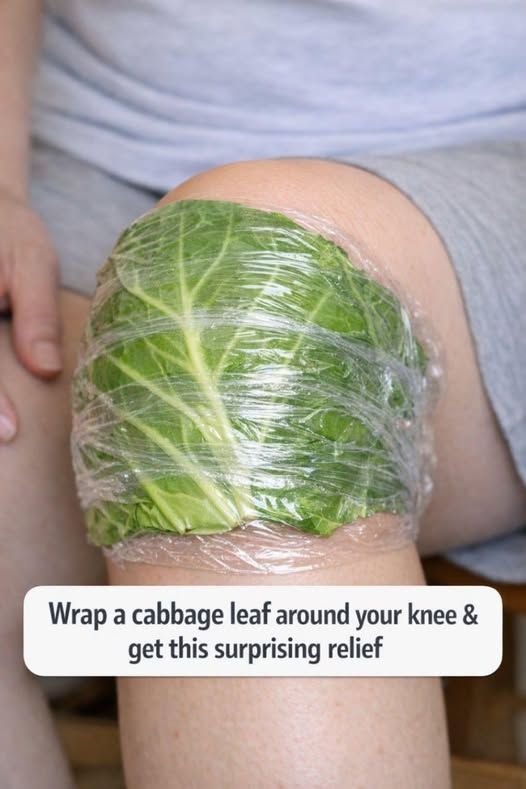
Wrap a Cabbage Leaf Around Your Knee? Here’s Why So Many People Swear by This Old-School Remedy
Discover why people wrap cabbage leaves around swollen knees, what science says about the relief, and how to use this natural remedy safely at home.
Your knee starts bothering you in the middle of the day. Maybe it’s stiff after sitting too long. Maybe it aches after a walk, a workout, or climbing stairs. You ice it. You rest. You stretch. Still, it feels swollen, tight, and annoying enough to distract you from everything else.
Then someone says something unexpected:
“Try wrapping a cabbage leaf around it.”
At first, it sounds ridiculous.
But here’s the strange part: people have been using cabbage leaves for joint discomfort, swelling, and inflammation for generations — and not just in folk medicine circles. Nurses, athletes, grandparents, and even some physical therapists have quietly recommended it for years as a low-risk comfort remedy.
So what’s actually going on here?
Can a simple cabbage leaf really calm an angry knee? Is it just another internet wellness trend? Or is there a legitimate reason people keep coming back to this surprisingly simple trick?
Let’s break down what cabbage leaf wraps may help with, how they’re used, what science says, and when this home remedy makes sense — and when it absolutely doesn’t.
Why People Put Cabbage Leaves on Their Knees in the First Place
The idea sounds odd until you understand the logic behind it.
Cabbage leaves are naturally cool, flexible, and packed with plant compounds called phytonutrients. Traditionally, they’ve been used as compresses for swelling and inflammation in different parts of the body.
Most people who try cabbage wraps for knees are dealing with one or more of these issues:
- Mild swelling
- Joint stiffness
- Temporary inflammation
- Post-exercise soreness
- Arthritis-related discomfort
- Heat or tightness around the joint
The leaf itself acts partly like a cooling compress. But many supporters believe the compounds inside cabbage — especially red and green cabbage varieties — may also contribute to soothing effects.
Whether that benefit is chemical, physical, or partly psychological is still debated. But the continued popularity of the remedy says something important:
A lot of people feel relief from it.
And in the world of non-invasive home remedies, comfort matters.
The Surprising Reason This Remedy Keeps Coming Back
Natural remedies usually disappear when they completely fail people.
Cabbage wraps haven’t.
In fact, searches for natural knee swelling remedies have climbed steadily in the United States as more people look for inexpensive, low-risk alternatives before reaching for stronger interventions.
Part of the appeal is practical.
A head of cabbage costs less than many over-the-counter topical creams. There’s no prescription involved. No complicated equipment. And unlike aggressive “miracle cures” online, cabbage leaf wraps are generally considered low risk for most healthy adults.
That doesn’t mean they’re magic.
But many users describe temporary relief that feels noticeable enough to repeat.
Common descriptions include:
- “The pressure eased.”
- “My knee felt cooler.”
- “The swelling looked less puffy.”
- “I could bend it more comfortably afterward.”
That consistency is why the remedy keeps circulating through wellness blogs, arthritis forums, and family conversations.
What Science Actually Says About Cabbage Leaf Wraps
This is where things get interesting.
Research on cabbage leaf therapy is limited, but not nonexistent.
Several small studies have explored cabbage leaves for inflammation-related discomfort, particularly in osteoarthritis and breast engorgement. Some findings suggest cabbage compresses may provide symptom relief comparable to common home treatments like cooling gels or warm compresses.
One reason researchers are interested in cabbage is because cruciferous vegetables contain compounds such as:
- Anthocyanins
- Glucosinolates
- Sulfur-containing antioxidants
These compounds are associated with anti-inflammatory properties when consumed in the diet. Whether they significantly absorb through the skin remains less clear.
That distinction matters.
Right now, there’s no strong evidence proving cabbage leaves “pull inflammation out” of joints. That claim goes beyond the science.
However, there is reasonable support for the idea that cabbage wraps may help some people feel temporary relief due to:
- Cooling effects
- Gentle compression
- Moisture retention
- Relaxation response
- Reduced perception of discomfort
In other words, the experience may be real even if the mechanism isn’t fully understood.
And honestly, that’s true for many accepted comfort therapies.
Why Knee Swelling Feels Worse Than It Looks
One reason people become desperate for relief is because swollen knees affect almost everything.
Walking changes.
Stairs become irritating.
Sleep gets interrupted.
Even small inflammation inside the joint can create pressure that makes movement feel stiff and awkward.
In the United States, knee pain is one of the most common musculoskeletal complaints among adults over 40. Sedentary work, obesity, high-impact sports, aging cartilage, and repetitive strain all contribute.
What surprises many people is how quickly mild swelling can snowball into reduced movement.
And reduced movement creates another problem:
Stiffness.
That cycle — swelling, guarding, reduced movement, more stiffness — is exactly why many people search for gentle home approaches before symptoms worsen.
How to Use a Cabbage Leaf Wrap Correctly
This is where most online advice gets messy.
You do not need to sleep wrapped in a dozen leaves or tape your leg aggressively.
The simplest method is usually best.
What You’ll Need
- Green or red cabbage
- Clean towel or bandage wrap
- Refrigerator
- Rolling pin or bottle (optional)
Step-by-Step Method
1. Chill the cabbage
Place several leaves in the refrigerator for at least 30 minutes.
Cool leaves tend to feel more soothing on swollen joints.
2. Wash and dry the leaves
Always clean them first to reduce irritation or contamination.
3. Remove the thick stem
This helps the leaf mold around the knee more comfortably.
4. Gently bruise the leaf
Use a rolling pin or bottle to lightly soften the surface.
You don’t want mush — just enough to release moisture.
5. Wrap the knee
Place the leaves directly around the painful or swollen area.
Secure loosely with a towel, elastic wrap, or cloth.
Do not wrap tightly enough to restrict circulation.
6. Leave it on for 20–40 minutes
Most people use cabbage wraps for short sessions.
If the leaves become warm or uncomfortable, remove them.
7. Check your skin afterward
Watch for redness, itching, or irritation.
Stop using the remedy if irritation develops.
Green Cabbage vs. Red Cabbage: Does It Matter?
This question comes up constantly.
Red cabbage contains higher levels of anthocyanins, the antioxidant pigments responsible for its purple-red color. These compounds are associated with anti-inflammatory activity in nutritional research.
Because of that, some people prefer red cabbage wraps.
But green cabbage is softer, easier to shape, and more commonly used in traditional home remedies.
Here’s a simple comparison:
| Feature | Green Cabbage | Red Cabbage |
|---|---|---|
| Texture | Softer | Slightly firmer |
| Cooling feel | Excellent | Excellent |
| Antioxidant content | Moderate | Higher |
| Skin staining risk | Low | Moderate |
| Traditional use | Very common | Increasingly popular |
For most people, either works fine.
The bigger difference usually comes from consistency and proper use — not cabbage color.
What Relief Can You Realistically Expect?
This is important.
A cabbage wrap is not going to regrow cartilage, reverse severe arthritis, or repair a torn ligament.
What it may do is help temporarily reduce sensations of:
- Tightness
- Puffiness
- Heat
- Mild soreness
- Stiffness after activity
For some people, that small reduction is enough to improve comfort and movement.
And sometimes, comfort creates momentum.
When knees feel slightly better, people often move more gently, stretch more consistently, and avoid the fear-based inactivity that can worsen stiffness over time.
That’s a meaningful benefit — even if it’s modest.
The People Most Likely to Try This Remedy
Interestingly, cabbage wraps appeal to very different groups.
Older Adults with Arthritis
Many seniors use cabbage wraps as part of a broader routine that includes movement, stretching, and anti-inflammatory habits.
Fitness Enthusiasts
Some runners and gym-goers use them after intense workouts when knees feel inflamed.
People Avoiding Medication Overuse
Not everyone wants to rely heavily on pain relievers for every flare-up.
Busy Adults Looking for Low-Effort Relief
A cabbage wrap takes less preparation than many recovery tools.
That simplicity is part of the appeal.
Common Mistakes That Make the Remedy Less Effective
A lot of people try cabbage wraps once, do them poorly, then dismiss them immediately.
Here are the biggest mistakes.
Wrapping Too Tightly
Compression should be gentle.
Too much pressure can worsen discomfort.
Using Warm Leaves
Cool leaves generally feel more soothing for swelling.
Expecting Instant Miracles
This is a comfort therapy, not a cure.
Ignoring Underlying Problems
Persistent knee pain deserves proper evaluation.
Leaving Leaves On Too Long
More is not always better.
Extended moisture against the skin can irritate sensitive people.
When Knee Pain Is a Sign of Something More Serious
This part matters more than the cabbage itself.
Home remedies are appropriate for mild discomfort — not emergencies.
Seek medical attention if you have:
- Severe swelling
- Fever
- Inability to bear weight
- Sudden injury
- Knee deformity
- Red streaking
- Locking or instability
- Persistent worsening pain
According to organizations like the Mayo Clinic and Cleveland Clinic, untreated joint issues can become more difficult to manage over time.
Natural remedies should support care, not replace appropriate diagnosis.
The Psychological Side of Why This May Feel Helpful
There’s another layer people rarely discuss.
Ritual matters.
The act of slowing down, caring for an inflamed joint, and intentionally resting can influence how discomfort is experienced.
Pain is not purely mechanical.
Stress, tension, attention, and anxiety all affect perception.
A cabbage wrap session often forces people to:
- Sit still
- Elevate the knee
- Reduce activity temporarily
- Focus on recovery
That alone can create meaningful relief.
And no — that doesn’t make it “fake.”
The brain and body are connected systems.
Modern pain science supports that idea strongly.
Mini Case Scenario: Why Some People Keep Using It
Karen, a 58-year-old office manager in Ohio, started using cabbage wraps after long shifts aggravated her knees.
At first, she laughed at the idea.
But after trying chilled green cabbage during evening TV time, she noticed her knees felt less tight afterward. Not dramatically different. Just easier.
That small improvement changed something.
She became more consistent with walking, stretching, and hydration because movement felt less intimidating.
Months later, she still uses cabbage wraps occasionally after high-activity days.
That’s how many real-world users describe the remedy:
Not life-changing. Just surprisingly comforting.
Other Natural Remedies Often Paired With Cabbage Wraps
People rarely use cabbage therapy alone.
Common combinations include:
Gentle Movement
Walking and mobility exercises help prevent stiffness.
Ice Packs
Especially useful for acute swelling.
Compression Sleeves
Can improve stability and confidence.
Weight Management
Even modest weight reduction decreases knee stress significantly.
Anti-Inflammatory Diet Choices
Foods rich in omega-3s, vegetables, berries, and fiber may support overall joint health.
According to Harvard Health Publishing, chronic inflammation is strongly influenced by lifestyle factors including diet, sleep, and activity levels.
Pros and Cons of Using Cabbage Leaves on the Knee
| Pros | Cons |
|---|---|
| Inexpensive | Limited scientific evidence |
| Easy to try at home | Temporary relief only |
| Non-invasive | Can irritate sensitive skin |
| Cooling sensation | Not a treatment for serious injury |
| Minimal side effects for most people | Results vary widely |
That balance is important.
Good health advice should stay realistic.
What’s Changed in 2026: The Rise of “Low-Tech Wellness”
One noticeable trend in 2026 is the return of simple wellness practices.
People are burned out on expensive gadgets, complicated recovery systems, and endless supplement stacks.
There’s growing interest in:
- Hydrotherapy
- Breathwork
- Mobility routines
- Heat/cold contrast
- Herbal compresses
- Low-cost home recovery tools
Cabbage wraps fit into that broader shift.
Not because they’re revolutionary — but because they’re accessible.
And accessibility matters when millions of Americans struggle with recurring joint discomfort.
The Future of Natural Inflammation Relief
Researchers continue exploring plant compounds and non-pharmaceutical recovery methods.
Future studies may better clarify whether cabbage compresses provide measurable anti-inflammatory effects beyond cooling and compression.
But regardless of future findings, one thing is already clear:
People increasingly want relief options that feel sustainable, affordable, and gentle.
That doesn’t mean abandoning modern medicine.
It means expanding the conversation beyond pills alone.
Frequently Asked Questions
Does wrapping cabbage around your knee actually work?
It may provide temporary relief for some people, especially for mild swelling or stiffness. The cooling effect and gentle compression appear to help comfort levels, though scientific evidence remains limited.
How long should I leave cabbage leaves on my knee?
Most people use them for about 20–40 minutes. Leaving them on excessively long can irritate the skin.
Is red cabbage better than green cabbage?
Red cabbage contains more antioxidant pigments, but both types are commonly used. Green cabbage is softer and easier to wrap.
Can cabbage leaves reduce arthritis pain?
Some people with arthritis report temporary comfort and reduced tightness. However, cabbage wraps are not a replacement for medical treatment or long-term management strategies.
Should cabbage leaves be hot or cold?
Cold cabbage leaves are generally preferred for swelling and inflammation because they provide a soothing cooling effect.
Are there any side effects?
Some people may experience skin irritation or sensitivity. Always test cautiously and discontinue use if redness or itching develops.
Can I sleep with cabbage leaves on my knee?
It’s usually better to use shorter sessions rather than overnight wraps. Extended moisture and pressure can irritate the skin.
How often can you use cabbage wraps?
Many people use them once daily or after activities that aggravate the knee. Consistency matters more than excessive use.
Is there scientific proof behind this remedy?
Research is limited but suggests cabbage compresses may help with comfort and inflammation-related symptoms in some situations. More studies are needed.
When should I see a doctor instead of using home remedies?
Seek medical care if pain is severe, swelling is sudden, the joint feels unstable, or symptoms continue worsening.
Action Checklist
What to Do
✔ Chill cabbage leaves before use
✔ Wrap gently, not tightly
✔ Use clean leaves every session
✔ Limit sessions to 20–40 minutes
✔ Pair with movement and stretching
✔ Monitor for skin irritation
✔ Seek medical advice for persistent pain
What to Avoid
✘ Expecting miracle cures
✘ Ignoring severe symptoms
✘ Wrapping overnight excessively
✘ Using cabbage instead of medical care
✘ Applying overly tight compression
✘ Assuming all knee pain is “normal aging”
Final Thoughts
Sometimes the simplest remedies survive for a reason.
Not because they’re magical.
Not because they cure everything.
But because they offer enough comfort, enough relief, and enough practicality that people keep coming back to them generation after generation.
A cabbage leaf wrapped around the knee probably won’t transform your life overnight. But if it helps reduce swelling, encourages rest, or makes movement feel a little easier, that’s not nothing.
And for many people dealing with everyday knee discomfort, “a little easier” can make a surprisingly big difference.
If you’ve ever tried cabbage wraps yourself, share your experience in the comments. Someone else dealing with stubborn knee pain might appreciate hearing what actually helped.
And if you found this article useful, send it to someone who’s tired of aching knees and looking for simple, realistic relief options.
A cabbage leaf wrap won’t replace proper medical care, but for mild knee swelling and stiffness, this old-school remedy may offer surprisingly soothing relief at almost no cost.