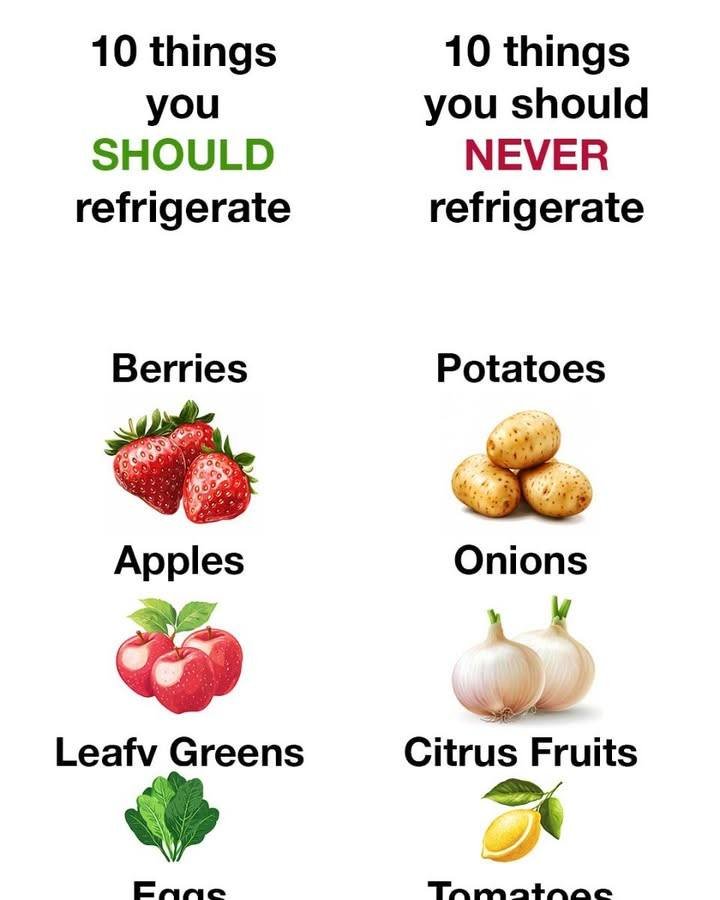
10 Things to Always Refrigerate & 10 Things to Never Refrigerate
Maximize food freshness with this guide: 10 items you should always refrigerate and 10 you should never refrigerate for better taste, nutrition, and safety.
Why Refrigeration Matters
Knowing what to refrigerate — and what not to — helps you:
-
Preserve flavor and texture
-
Reduce food waste
-
Prevent bacterial growth and spoilage
-
Maintain nutritional value
Even common foods can be ruined if stored incorrectly. Here’s a handy guide for your kitchen.
10 Things You Should Always Refrigerate
1️⃣ Milk and Dairy Products
-
Includes milk, cream, yogurt, and soft cheeses
-
Why: Keeps bacteria from multiplying, preserving freshness
2️⃣ Eggs
-
Especially in the U.S., eggs are washed and need refrigeration
-
Tip: Keep in original carton, not door shelves
3️⃣ Raw Meat and Poultry
-
Beef, chicken, pork, and seafood must be stored cold
-
Tip: Wrap tightly and place on the bottom shelf to prevent cross-contamination
4️⃣ Cooked Leftovers
-
Any cooked meals should be refrigerated within 2 hours
-
Tip: Store in airtight containers for 3–4 days
5️⃣ Fresh Berries and Soft Fruits
-
Strawberries, blueberries, raspberries spoil quickly
-
Tip: Keep unwashed in the fridge; wash before eating
6️⃣ Leafy Greens
-
Spinach, kale, lettuce
-
Tip: Store in a slightly damp paper towel in a plastic bag to stay crisp
7️⃣ Fresh Herbs
-
Basil, cilantro, parsley last longer when wrapped in a damp paper towel in a container
8️⃣ Opened Sauces and Condiments
-
Mayonnaise, ketchup, salad dressings
-
Tip: Refrigerate after opening to maintain flavor and safety
9️⃣ Tofu
-
Must stay cold to prevent bacterial growth
-
Tip: Keep in water and change daily if not used immediately
10️⃣ Soft Cheeses & Deli Meats
-
Brie, feta, sliced ham, turkey
-
Tip: Store in airtight containers to preserve moisture
10 Things You Should Never Refrigerate
1️⃣ Tomatoes
-
Cold destroys flavor and texture
-
Tip: Keep at room temperature, away from sunlight
2️⃣ Onions
-
Refrigeration can make them soft and moldy
-
Tip: Store in a cool, dry, dark place with ventilation
3️⃣ Potatoes
-
Cold converts starch to sugar, changing taste and texture
-
Tip: Store in a dark, ventilated pantry
4️⃣ Garlic
-
Refrigeration can cause mold and sprouting
-
Tip: Keep in a dry, cool, ventilated area
5️⃣ Honey
-
Cold causes crystallization
-
Tip: Keep in a tightly sealed jar at room temperature
6️⃣ Avocados (Unripe)
-
Refrigeration stops the ripening process
-
Tip: Leave on the counter until they yield to gentle pressure
7️⃣ Bananas
-
Cold turns peel brown and can alter taste
-
Tip: Keep on the counter; refrigerate only when fully ripe to slow decay
8️⃣ Bread
-
Refrigeration dries it out quickly
-
Tip: Keep in a bread box or freeze for longer storage
9️⃣ Coffee
-
Coffee beans or grounds absorb moisture and odors in the fridge
-
Tip: Store in an airtight container in a cool, dark place
10️⃣ Melons (Whole)
-
Refrigeration reduces sweetness and flavor
-
Tip: Keep whole cantaloupes, watermelons, and honeydews at room temperature; refrigerate only after cutting
Quick Tips for Proper Food Storage
-
Use clear containers for leftovers to easily track freshness
-
Label opened packages with the date
-
Avoid overloading the fridge — air circulation keeps everything cool
-
Separate raw meat from ready-to-eat foods
Proper storage isn’t just about keeping food cold — it’s about preserving taste, nutrition, and safety.
✨ Keep the 10 foods that need refrigeration cold, and leave the 10 that don’t at room temperature — your meals will last longer, taste better, and waste less.