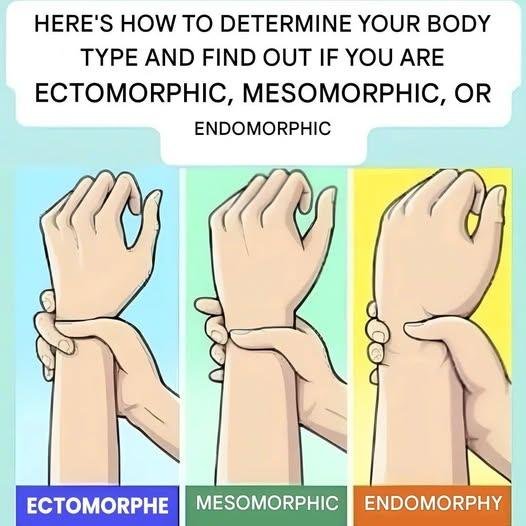
🔥 Ectomorph, Mesomorph, or Endomorph? Discover Your Body Type—and How to Finally Make It Work for You
Not sure if you’re an ectomorph, mesomorph, or endomorph? Discover your body type and learn how to eat, train, and optimize results effectively.
You’ve tried different workouts. Switched diets. Maybe even followed someone else’s exact routine.
And still… the results don’t match the effort.
Here’s what most people miss: not all bodies respond the same way.
What works effortlessly for one person can feel impossible for another—and it often comes down to your body type.
Understanding whether you’re an ectomorph, mesomorph, or endomorph isn’t about labeling yourself. It’s about finally aligning your strategy with how your body actually works.
In this guide, you’ll figure out your body type, understand what it really means (beyond stereotypes), and learn how to use it to your advantage—whether your goal is fat loss, muscle gain, or simply feeling better in your own skin.
What Are Body Types (And Why They Still Matter)?
The concept of body types—also known as somatotypes—was originally developed to categorize physical traits like bone structure, metabolism, and fat distribution.
The three main types are:
- Ectomorph – naturally lean, struggles to gain weight
- Mesomorph – naturally muscular, gains and loses weight easily
- Endomorph – tends to store fat more easily, broader build
Now, let’s be clear: most people are not purely one type. You’re likely a blend.
But identifying your dominant traits gives you a massive advantage—it helps you stop guessing and start training smarter.
Why This Matters (Especially Today)
In the U.S., the fitness industry often pushes one-size-fits-all programs:
- “Just eat less and move more”
- “Lift heavy and bulk”
- “Cut carbs and do cardio”
But these approaches ignore individual differences.
That’s why:
- Some people gain muscle quickly
- Others struggle to lose fat despite dieting
- Some stay skinny no matter how much they eat
When you understand your body type, you stop fighting your biology—and start working with it.
The 3 Body Types Explained (In Real Terms)
1. Ectomorph: The Naturally Lean Frame
You might be an ectomorph if:
- You have a slim build with narrow shoulders
- You struggle to gain weight or muscle
- Your metabolism feels “fast”
- You can eat a lot without gaining much
What’s really going on:
Your body burns calories efficiently. Great for staying lean—but not ideal for building size.
Common frustration:
“I eat everything and still can’t gain weight.”
2. Mesomorph: The Naturally Athletic Build
You might be a mesomorph if:
- You gain muscle relatively easily
- You have a balanced, athletic frame
- You respond quickly to training
- Fat loss is manageable with consistency
What’s really going on:
Your body is highly responsive to both diet and exercise.
Common frustration:
Plateaus when routines become inconsistent.
3. Endomorph: The Efficient Energy Storer
You might be an endomorph if:
- You gain fat easily
- You have a wider frame or softer appearance
- Weight loss feels slow
- You retain water more easily
What’s really going on:
Your body is efficient at storing energy—which historically was a survival advantage.
Common frustration:
“I feel like I gain weight just by looking at food.”
How to Identify Your Body Type (Without Overthinking It)
Ask yourself:
- Do I gain weight easily or struggle to?
- How does my body respond to overeating?
- What happens when I stop working out?
- Where do I naturally store fat?
Quick self-check:
- Stay skinny no matter what → likely ectomorph dominant
- Build muscle quickly → mesomorph traits
- Gain fat easily → endomorph tendencies
Again—you’re likely a mix. That’s normal.
How to Train for Your Body Type
This is where things start to click.
🏋️ Ectomorph Training Strategy
Goal: Build muscle and strength
- Focus on heavy compound lifts
- Limit excessive cardio
- Train 3–5 times per week
- Prioritize recovery (you burn energy fast)
What to avoid:
Endless cardio sessions—they’ll slow your progress.
💪 Mesomorph Training Strategy
Goal: Optimize performance and maintain balance
- Combine strength training and cardio
- Vary workouts to avoid plateaus
- Train 4–5 times per week
What to avoid:
Complacency—your body adapts quickly.
🔥 Endomorph Training Strategy
Goal: Fat loss and metabolic efficiency
- Focus on strength + high-intensity training
- Incorporate regular cardio
- Stay consistent above all
What to avoid:
Long periods of inactivity—it impacts progress quickly.
How to Eat for Your Body Type
Diet is where most people go wrong.
🍽️ Ectomorph Nutrition
- Higher calorie intake
- Focus on carbs and protein
- Eat frequently
- Include calorie-dense foods
Reality check: You need more food than you think.
🥗 Mesomorph Nutrition
- Balanced macros (protein, carbs, fats)
- Moderate calorie intake
- Adjust based on activity level
Key advantage: Flexibility.
🥑 Endomorph Nutrition
- Prioritize protein and healthy fats
- Moderate carbs (especially refined ones)
- Focus on whole foods
- Control portion sizes
Important: It’s not about starving—it’s about structure.
Real-World Scenario
Jessica, a 35-year-old from California, spent years following high-carb diets she saw online.
But she had strong endomorphic traits.
Once she adjusted:
- Reduced refined carbs
- Added strength training
- Focused on consistency
She didn’t just lose weight—she maintained it.
Same effort. Different strategy.
Comparison Table: Body Types at a Glance
| Body Type | Strengths | Challenges | Best Focus |
|---|---|---|---|
| Ectomorph | Lean, fast metabolism | Hard to gain muscle | Strength + calories |
| Mesomorph | Builds muscle easily | Can plateau | Balanced training |
| Endomorph | Strong, stores energy | Gains fat easily | Fat loss + consistency |
Common Mistakes (And How to Fix Them)
❌ Copying someone else’s routine
Fix: Customize based on your body type
❌ Ignoring nutrition
Fix: Training alone isn’t enough
❌ Expecting fast results
Fix: Body transformation is gradual
❌ Misidentifying your body type
Fix: Focus on patterns, not labels
Expert-Level Insights Most People Miss
1. Body types influence tendencies—not destiny
You’re not stuck—you just need the right approach.
2. Lifestyle matters more than genetics alone
Sleep, stress, and consistency often outweigh body type.
3. You can shift your body composition over time
An “endomorph” can become lean and muscular with the right habits.
4. Most frustration comes from mismatch—not effort
It’s not that you’re doing nothing—it’s that you’re doing the wrong things for your body.
2026 Trend: Personalized Fitness Over Generic Plans
The fitness world is moving toward:
- Data-driven training
- Personalized nutrition
- Habit-based progress
Body type awareness fits perfectly into this shift—it’s a foundational layer of personalization.
Pros and Cons of Using Body Types
✅ Pros
- Provides direction
- Reduces guesswork
- Helps set realistic expectations
- Improves consistency
❌ Cons
- Can be oversimplified
- Not always 100% accurate
- May lead to labeling if misunderstood
❓ Frequently Asked Questions
1. Can I be more than one body type?
Yes—most people are a mix.
2. Do body types change over time?
Your structure stays similar, but body composition can change significantly.
3. Is body type genetic?
Partly, yes—but lifestyle plays a major role.
4. Which body type is best?
None—each has strengths and challenges.
5. Can an ectomorph build muscle?
Absolutely—it just requires more calories and consistency.
6. Can an endomorph get lean?
Yes—with structured diet and training.
7. Do I need supplements?
Not necessarily—focus on basics first.
8. How long before I see results?
Typically 4–8 weeks with consistent effort.
9. Should I follow strict diets?
Sustainable approaches work better long-term.
10. What matters most overall?
Consistency beats perfection.
🧾 Action Checklist
✔ What to Do
- Identify your dominant body type
- Align your diet and training accordingly
- Stay consistent for at least 4–8 weeks
- Track progress (not perfection)
- Adjust based on results
❌ What to Avoid
- Comparing yourself to others
- Jumping between programs
- Ignoring recovery
- Expecting instant transformation
🏁 Conclusion
Your body isn’t the problem.
The strategy might be.
Once you understand your body type, things start to make sense—why certain diets failed, why some workouts felt ineffective, and why progress seemed inconsistent.
This isn’t about limitations. It’s about clarity.
👉 Start where you are
👉 Use what works for your body
👉 Stay consistent
And you’ll see results that finally feel aligned.
You don’t need a new program—you need the right one for your body.